
THE CHILDREN OF TODAY WILL INHERIT A DIFFERENT OCEAN. WHAT WILL THEY HAVE TO OFFER?
Bali, June 7, 2026: Climate change is often discussed solely in terms of statistics, scientific reports, or long-term projections. However, for the generation that will live the longest with these impacts, it seems more important right now for them to understand this issue from an early age.
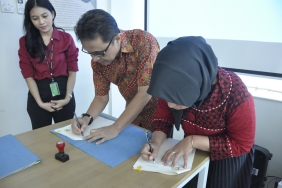
This question formed the basis for a collaboration between the Indonesian Coastal Schools Program of the Ministry of Marine Affairs and Fisheries (KKP) and Save the Children Indonesia’s Climate Smart Schools program during the “Indonesian Coastal Schools x Climate Smart Schools” session on World Ocean Day and Coral Triangle Day 2026 in Bali, initiated by WWF-Indonesia in partnership with KKP.
Through various games and interactive activities at the Mangrove Stage, children were introduced to Indonesia’s oceans while learning about the challenges currently facing coastal ecosystems—ranging from climate change and marine debris to the roles of mangroves, seagrass, and coral reefs in maintaining ocean health.
Speaking on behalf of the KKP Director of Coastal and Small Islands Affairs, Kak Fina noted that Indonesia is a maritime nation, with approximately 70 percent of its territory consisting of oceans. These oceans are home to various critical ecosystems that support the livelihoods of coastal communities and society at large.
However, climate change is placing increasingly tangible pressure on these ecosystems. “Indonesia’s territory consists of 70% ocean and 30% land. But looking at our ecosystems today, we can see that many are already beginning to suffer damage. As temperatures rise and the weather becomes more unpredictable, our oceans are also beginning to suffer," she said.
Through an age-appropriate approach, participants were encouraged to understand that protecting the ocean can start with simple habits such as disposing of trash properly, reducing plastic waste, and sharing this knowledge with family and friends.
A collaboration between WWF-Indonesia, the Ministry of Marine Affairs and Fisheries, and Save the Children Indonesia’s Climate Smart Schools program, this session complements the conservation education approach that WWF-Indonesia has been striving to educate children by directly involving them and helping them get to know the environment through its most basic ecological aspects. As was done with another partner in Sanur, Bali, two years prior, WWF-Indonesia used an “edutainment” concept that proved highly effective for children. In addition to introducing the functions of coastal ecosystems through educational materials, participants were also invited to engage directly in various activities, such as planting mangroves, releasing sea turtle hatchlings, and writing stories about their experiences during the program. This hands-on involvement helped the children connect the material they learned with the conditions they observed and the actions they took themselves. This approach was combined with safe, child-friendly learning methods so that participants could comfortably take part in every activity. Through this series of activities, children not only learned about coastal ecosystems but also came to understand the relationship between humans and nature from an early age.
In fact, the hope is simple: the earlier children understand the relationship between humans and nature through real-life experiences, the greater the chance that a sense of care will develop—one they will carry into adulthood.
In addition to discussing the environment, this session also prioritizes child safety above all else. Kak Dila explained that all activities at Stage Mangrove implement safeguarding policies to ensure children can learn and participate in a safe, comfortable, and inclusive environment.
“Any form of violence, in any shape or form, is not permitted in these activities. So, friends, if you see or feel unsafe or uncomfortable, please report it to us,” she explained.
One of the topics introduced to the participants was the importance of protecting children’s identities in public spaces and on social media. There are three pieces of information that must always be protected: the child’s name, location, and face. Disclosing these three elements without adequate safety considerations can increase the risk of harm.
Learning at Stage Mangrove was structured around five game stations that addressed various coastal and climate change issues. The children played a climate change-themed Snakes and Ladders game, learned about the problem of plastic waste on the coast, studied the functions of seagrass and mangroves through interactive cards, designed climate change adaptation solutions using LEGO, and understood the concept of recycling through various creative activities.
Through this collaboration, Sekolah Pantai Indonesia and Sekolah Cerdas Iklim demonstrate that environmental education can begin at an early age in a way that is both fun and relevant to the challenges future generations will face. After all, the health of our oceans in the future will depend heavily on how early today’s generation learns how to protect them.