
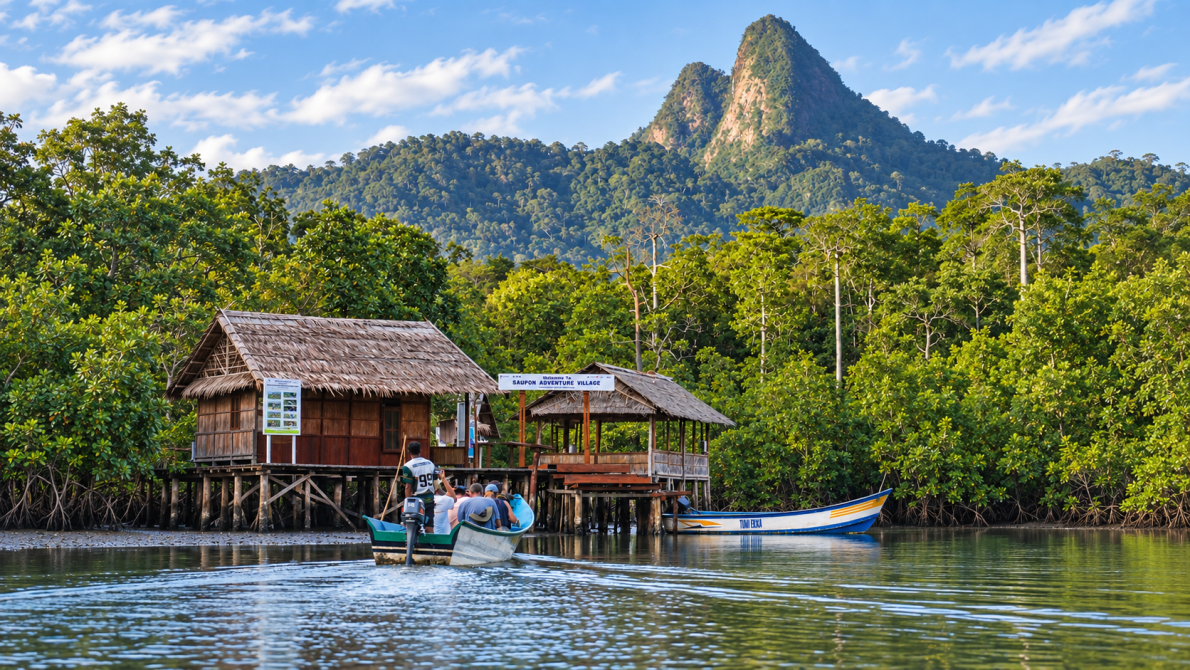
PROTECTING THE FOREST, WELCOMING THE WORLD: LESSONS FROM SAUPON FOR NANGGOUW
In Raja Ampat, five residents of Nanggouw Village learned that a travel experience can begin with a plate of local food, a stalk of sago, and a forest that remains standing. They brought home the idea of developing tourism rooted in village life.
At the dining table of Saupon Homestay, mangrove crabs served as part of an introduction. Some were boiled, others stir-fried. Accompanying them was “bia kodok,” the local name for clams, served to the group from Nanggouw Village, Tambrauw. Mama Alma Rumbiak and Anci Gaman prepared the meal with efficiency. In this small restaurant, the food was neatly arranged to welcome the participants who had come to gain new experiences. From the surrounding environment, the ingredients made their way to the dining table, bringing the hosts together with the newly arrived guests.
For the three young men and two women—members of the Toweuw Nanggouw Ecotourism Group—this welcome served as an introductory lesson in managing a guesthouse. Before discussing tour packages and promotions, they faced a fundamental challenge: how to make guests feel welcome.
In Saupon, hospitality is also expressed through song.
“Who owns the mangrove forest? It belongs to all of us.”
The lyrics sung by the guide conveyed the idea that accompanied their journey. The forest is part of their shared life. As tourism grows around it, the responsibility to care for it becomes part of the experience of welcoming visitors.
The Nanggouw group reached Raja Ampat after traveling by car, speedboat, and motorboat. From July 29 to August 4, 2026, they participated in educational activities at Saupon Homestay in Waifoi Village, in the Mayalibit Bay area. WWF Indonesia facilitated the meeting in collaboration with the Saupon management team, which receives guidance from the Southwest Papua Natural Resources Conservation Agency (BBKSDA). Representatives from the Tambrauw Regency Tourism Office also participated in the activities. Participants combined theoretical knowledge with practical application and exchanged insights with the Saupon management team.
Nanggouw itself has been recognized as an ecotourism village since 2024. An award at the Indonesian Tourism Village Awards the following year acknowledged the steps that had been taken. However, homestay managers and their guides still felt the need to strengthen their skills. During a group meeting in Nanggouw on July 28, 2026, Herman Yesnath expressed the need to learn more about tourism-conscious villages. This desire led them to Saupon, where other communities had already developed lodging and tourism activities based on the village’s potential.
The homestay in Waifoi Village, in the Mayalibit Bay area, has been in operation since 2018, involving residents in the preservation of the village’s resources. This experience provided the Toweuw group with a model for tourism management that aligns closely with their needs. These lessons are applied in their daily work. Participants learned how to welcome guests, prepare meals, tidy up rooms, and provide basic sleeping accommodations. Luxury was not a priority in this training. What mattered most was cleanliness, basic amenities, and attention to the needs of guests. “From this activity, I learned that managing ecotourism isn’t just about having a tourist destination, but also about how we welcome guests, manage homestays, prepare meals, and provide good service. The experience in Saupon helped me see things we can apply to develop Toweuw Ecotourism in Nanggouw,” said Donika Yesnath, one of the participants in this training. For Yeheskiel Yekwam, another participant, the experience clarified the connection between service and teamwork. A room ready for guests or a meal served on the table is the result of effective group management that must be in place behind the scenes. “We had already been running ecotourism activities in Nanggouw, but after participating in the training in Saupon, I gained a clearer picture of how a group manages guests and tourist attractions. I also learned that cleanliness, communication with guests, and teamwork are crucial for ensuring tourists feel comfortable,” he said.
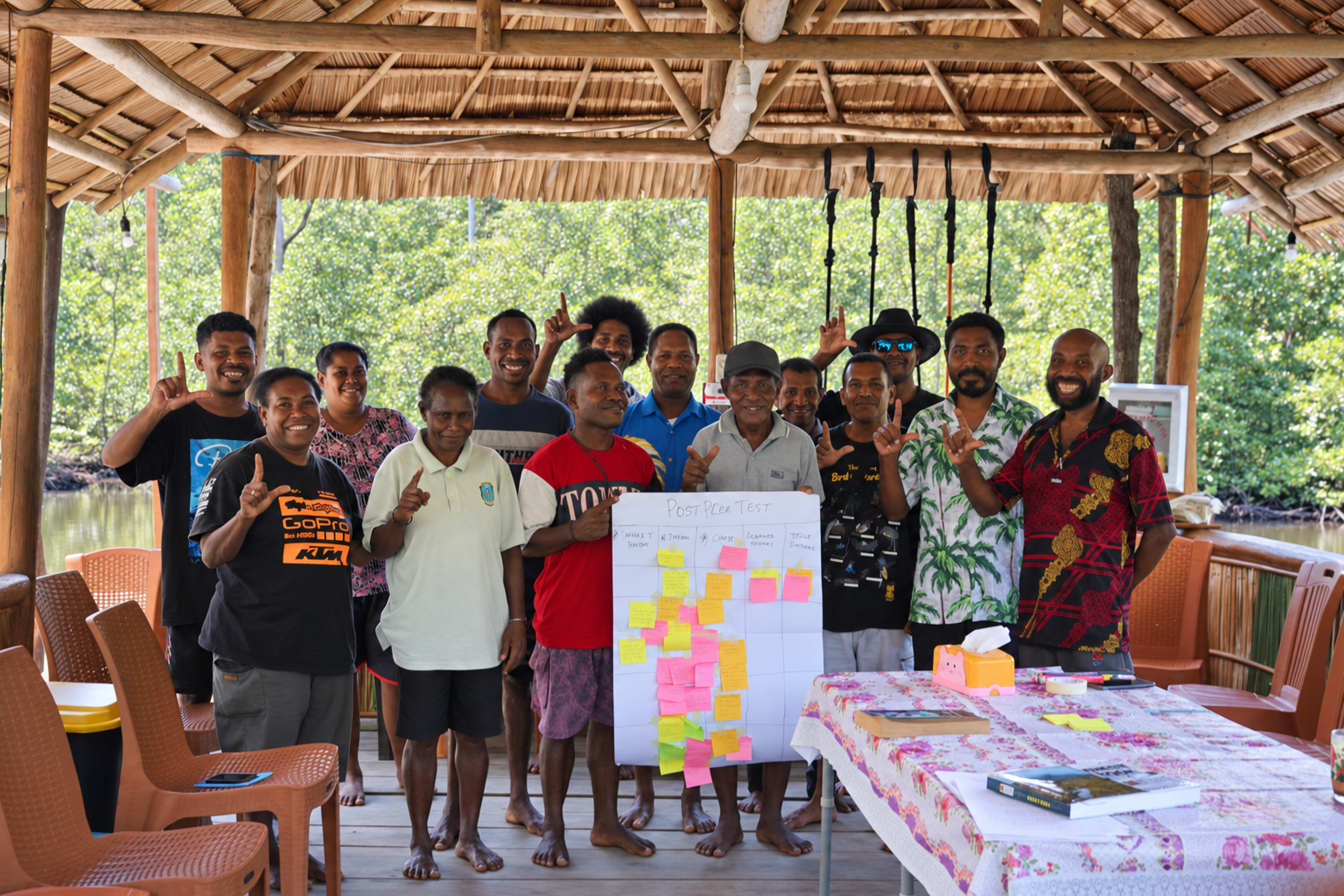
In the kitchen, participants learn how to prepare mangrove crabs, known as keraka, and freshwater clams, known as bia kodok. Food sourced from the surrounding environment is an integral part of the hospitality experience. The dishes give visitors the opportunity to learn what the local community eats and where the food comes from. A series of activities introducing sago expands on this experience. Visitors are invited to participate in planting, learn about the process of steaming and pounding sago, and even taste papeda. For the Toweuw group, this activity demonstrates how local work and knowledge can be woven into a learning experience, with community members serving as guides who introduce and explain the processes. Participants also observe interactions between foreign guests and elementary school children, as well as introductions to local customs through Man Sorandak and the suling tambur. In this approach, the village comes to life through the daily lives of its residents. The visitor experience is shaped by encounters with the people who preserve this knowledge.
The goal of preserving nature in Saupon is translated into a number of management practices. These include limiting electricity use during the day, not using air conditioning, and centralizing bathrooms and toilets to manage waste disposal. The community also protects the surrounding mangrove forests. These efforts demonstrate that environmental considerations must be integrated into the homestay’s operational decisions. Saupon also allocates a portion of its profits to support the education of children in Waifoi Village. The connection between tourism and village life becomes more tangible when the benefits of the business address the needs of the residents. For the interns, this experience provides further insight into for whom ecotourism is developed and how its proceeds can be utilized.
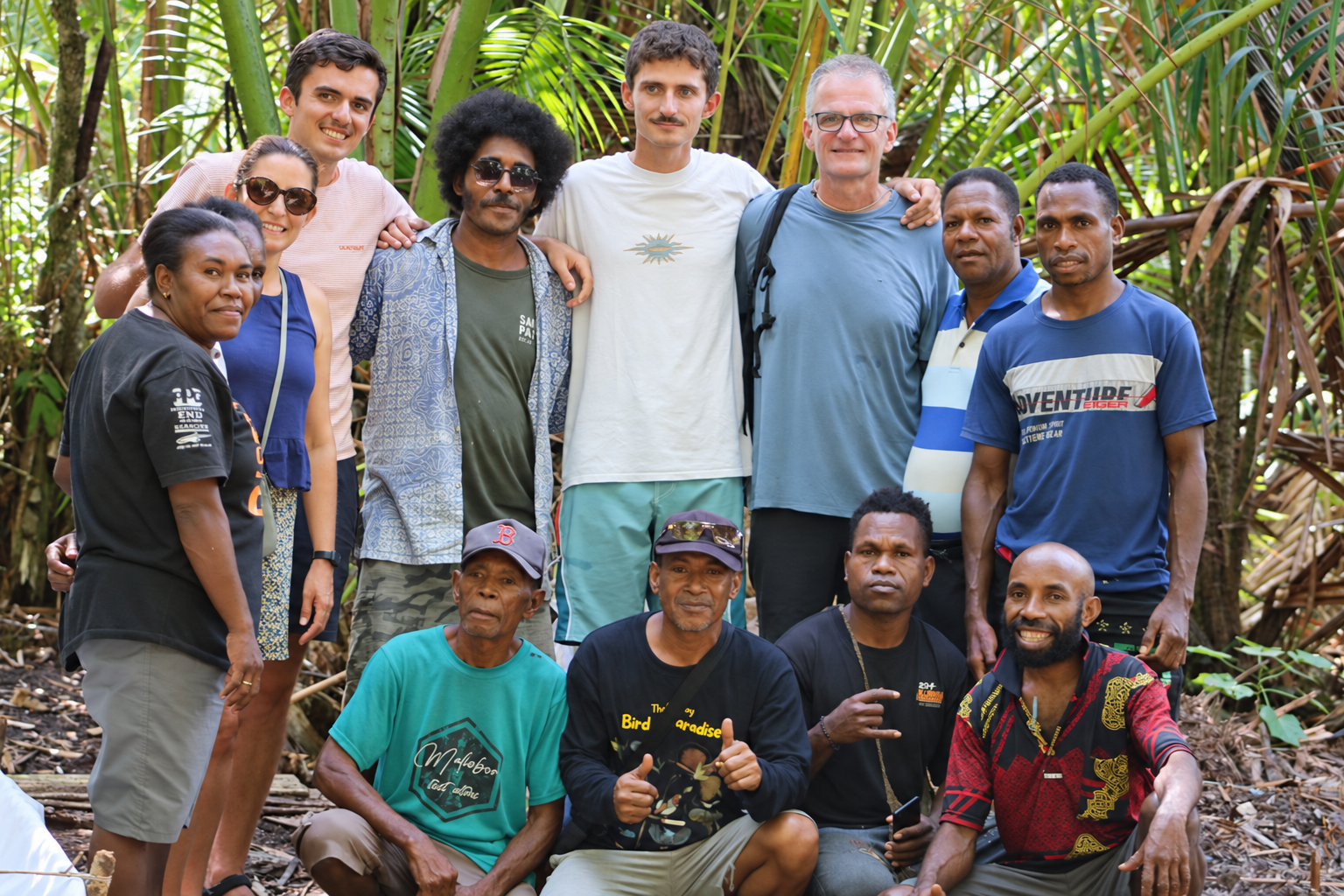
During the activity, participants were introduced to the concepts of climate tourism and conservation efforts. Sago planting was one of the activities, alongside mangrove protection and homestay management. This experience serves as an example of actions that can be further explored; however, its implementation in Nanggouw still needs to be adapted to the circumstances and capabilities of local groups. The training facilitated by WWF Indonesia’s Papua Program also served as a space to build relationships among managers. The Toweuw and Saupon groups exchanged promotional leaflets. Together with representatives from the Tambrauw Regency Tourism Office, they hope this collaboration will continue and open opportunities for visits from Raja Ampat to Nanggouw. The groups and agency representatives expressed their appreciation to WWF for this opportunity to learn together. Follow-up efforts in the village will determine how this knowledge is applied.
After a week of learning, the next task awaits in Nanggouw: applying that knowledge to the guest rooms they maintain, the meals they prepare, and the division of labor among group members. The sago plantations in Saupon offer a glimpse of the path forward. A guest’s experience may culminate in a bowl of papeda, but its sustainability depends on the plants that grow and the residents who continue to care for them.