WWF-INDONESIA SUPPORTS A WORKSHOP ON FISH STOCK ASSESSMENTS ORGANIZED BY THE MINISTRY OF MARINE AFFAIRS AND FISHERIES (KKP) IN COLLABORATION WITH ACADEMICS IN SEMARANG
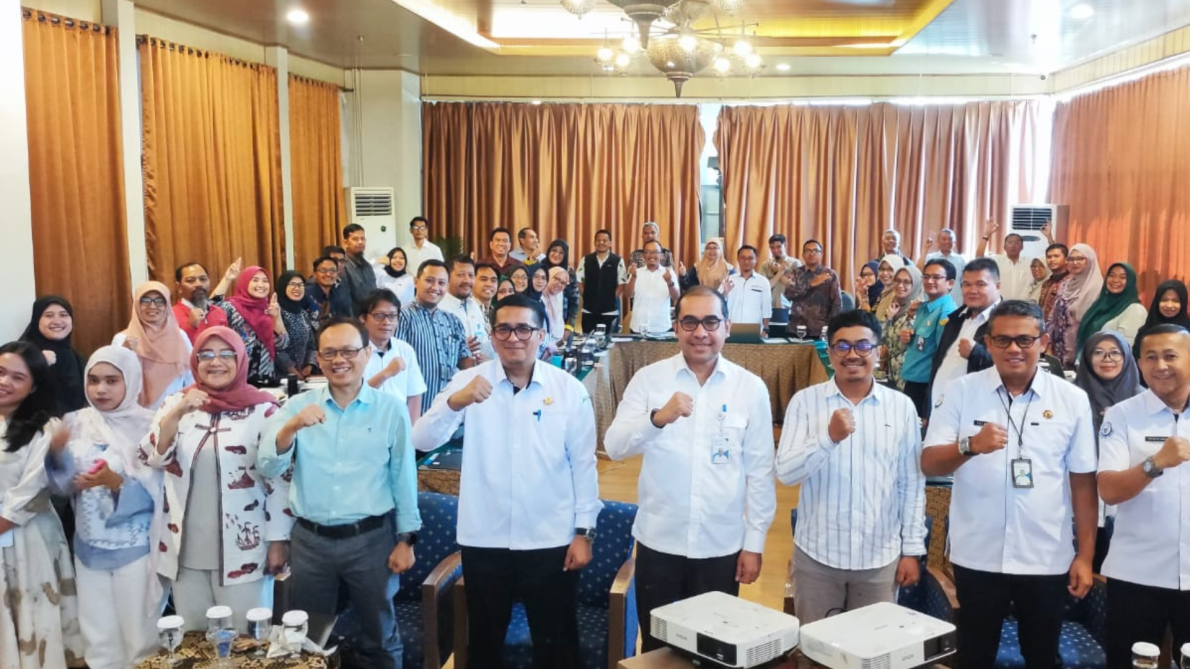
WWF-Indonesia supported the third batch of the Stock Assessment Workshop organized by the Ministry of Marine Affairs and Fisheries (KKP) as part of efforts to strengthen the implementation of the Measured Fishing (PIT) policy. This support is a concrete example of the collaboration between WWF and the Directorate General of Capture Fisheries to strengthen data and information on fish stock resources. The workshop, held in Semarang on June 9–11, 2025, was attended by 33 prospective Scientific Service Providers (SSP) from various universities, nominated by the Regional Fisheries Management Units (UPP WPPNRI) 573, 711, and 712.
As a maritime nation with a territorial sea area of 16 million square kilometers, Indonesia possesses enormous fisheries resource potential. In 2024, Indonesia’s marine capture fisheries production reached 7.3 million metric tons, consisting of various key commodities such as skipjack, snapper, bonito, tuna, and others (kkp.go.id). This vast potential must be balanced with management practices that ensure the sustainability of fish stocks so they remain available for future generations.
In line with these efforts, the Ministry of Marine Affairs and Fisheries (KKP) continues to strengthen fisheries management through the implementation of the Measured Fishing Policy (PIT) as part of the implementation of the principles of Blue Economy. This policy requires accurate scientific data on fish stock potential, utilization rates, and Total Allowable Catch (TAC) in each WPPNRI as a basis for the National Commission for Fisheries Resource Assessment (Komnas KAJISKAN) to formulate scientific recommendations for determining estimates of national fish stock potential.
In this process, Komnas KAJISKAN is supported by Scientific Service Providers (SSPs)—institutions with expertise in fish stock assessment and fisheries data analysis. However, the number of verified SSPs in Indonesia remains limited at present. Therefore, the Ministry of Marine Affairs and Fisheries (KKP) is organizing a Stock Assessment Workshop to expand the SSP network through the involvement of universities and research institutions. Through training in standardized fish stock assessment methods, prospective SSP participants are expected to be able to conduct assessments independently, collaboratively, and produce more accurate assessments as the basis for formulating scientific recommendations in their respective areas of operation.
At the Batch III Stock Assessment Workshop, prospective SSP members were trained in fish stock assessment methodologies and protocols in accordance with Komnas KAJISKAN standards. This training is intended to support fish stock assessments in UPP WPPNRI 573, 711, and 712, which cover waters in the Indian Ocean from the southern part of Java to Nusa Tenggara, the Karimata Strait, the Natuna Sea and the North Natuna Sea, as well as the Java Sea.
The workshop was opened by the Director of Fisheries Resource Management (PSDI) at the Ministry of Marine Affairs and Fisheries (KKP), Syahril Abd Raup, who emphasized the importance of scientific data as the foundation for managing the marine and fisheries sector.
“Data and information related to resource stocks are the primary foundation for the government in formulating and establishing targeted policies for the marine and fisheries sector,” he said.
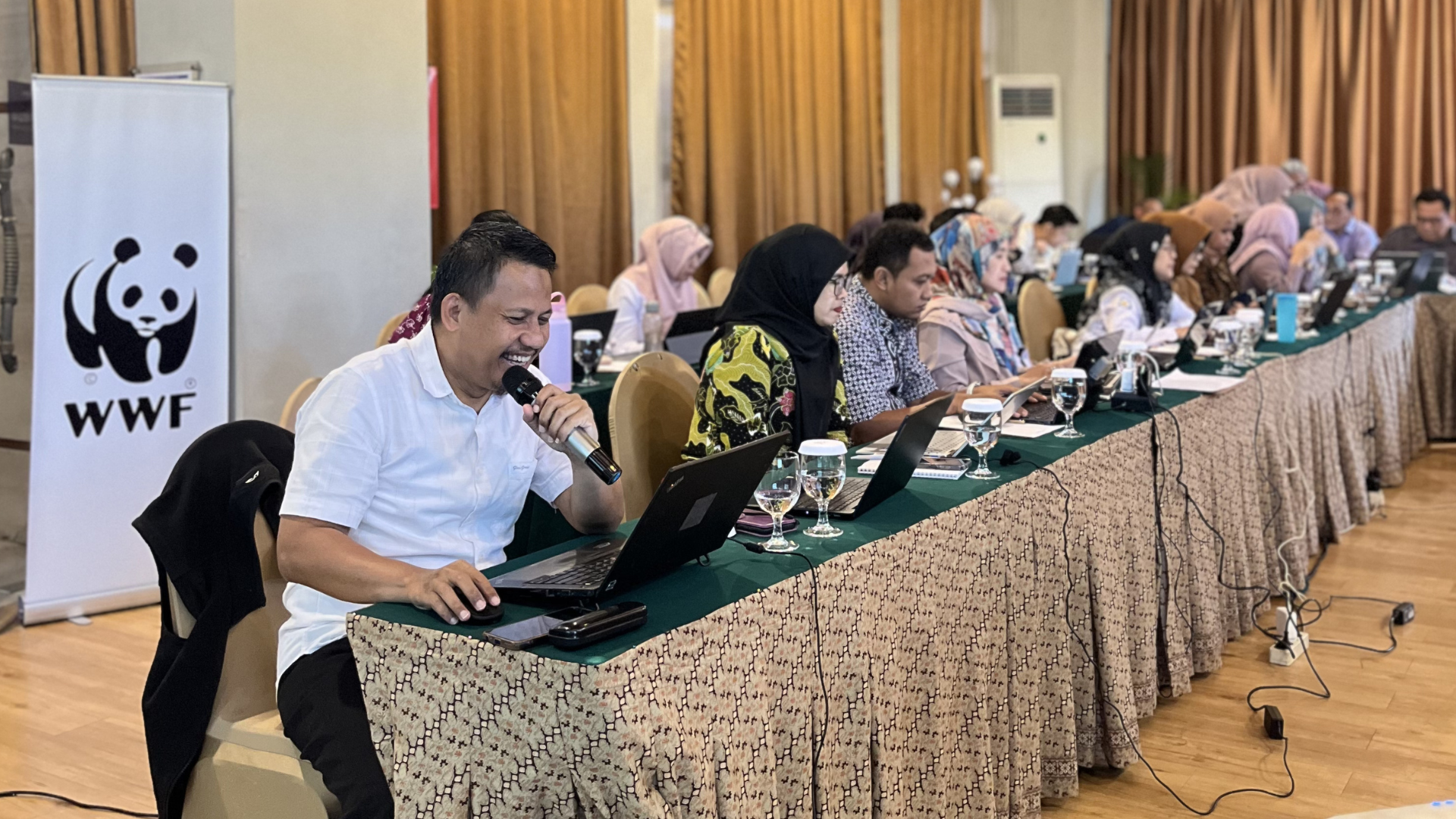
During the workshop, participants received training from the National Research and Innovation Agency (BRIN) and the National Commission for KAJISKAN. Prof. Indra Jaya, Chair of the National Commission for Fisheries Resources Assessment (Komnas KAJISKAN), explained that the application of standardized fish stock assessment methods will yield more accurate information to support the sustainability of fish resources in Indonesia.
In addition to supporting PIT policies, the results of fish stock assessments also serve as the basis for determining the Total Allowable Catch (TAC), which will subsequently be allocated transparently through a fishing quota system. This approach is expected to foster equitable fisheries governance while preserving the sustainability of marine ecosystems.
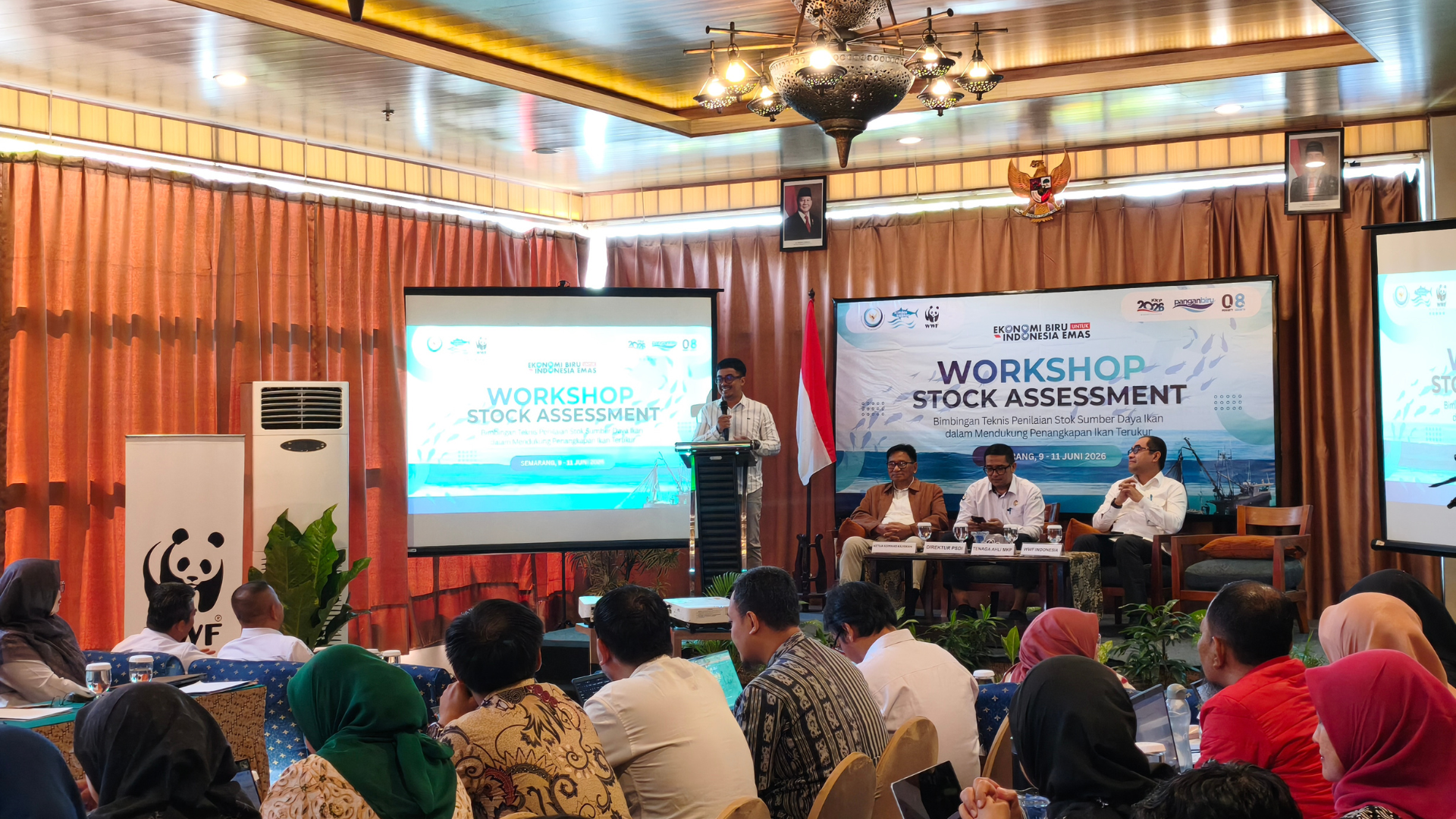
This workshop aligns with WWF-Indonesia’s commitment to promoting the sustainable productivity of aquatic biological resources. Recognizing the noble objectives of this initiative, Achmad Mustofa, Sustainable Fisheries and Aquaculture Lead at WWF-Indonesia, expressed his appreciation for the workshop. According to him, strengthening national capacity by increasing the number of SSPs is a long-term investment to support sustainable fisheries management.
“WWF believes that good fisheries management must be built on a foundation of strong science, credible data, and transparent, evidence-based decision-making processes,” he said.
WWF-Indonesia hopes this workshop will not only serve as a forum for technical learning but also as a platform for building collaborative networks among the government, universities, research institutions, and partner organizations to strengthen Indonesia’s fisheries governance. Through this collaboration, it is hoped that more experts will be able to produce high-quality scientific information to support the sustainable management of fishery resources.