GREEN PULSE TALK SHOW: BRIDGING POLICY, INDUSTRY AND NATURE IN THE INDONESIAN SUSTAINABLE FINANCE ECOSYSTEM
The journey of change in sustainable finance is a monumental stage that is both challenging and opens up a fundamental question: in the midst of the climate crisis and natural degradation, is our financial system already part of the solution or is it still funding the problem?
The current financial system has shown significant adaptation through various initiatives that are beginning to lead to solutions; however, sustainability itself remains a progressive and evolving concept, both in its approach and implementation.
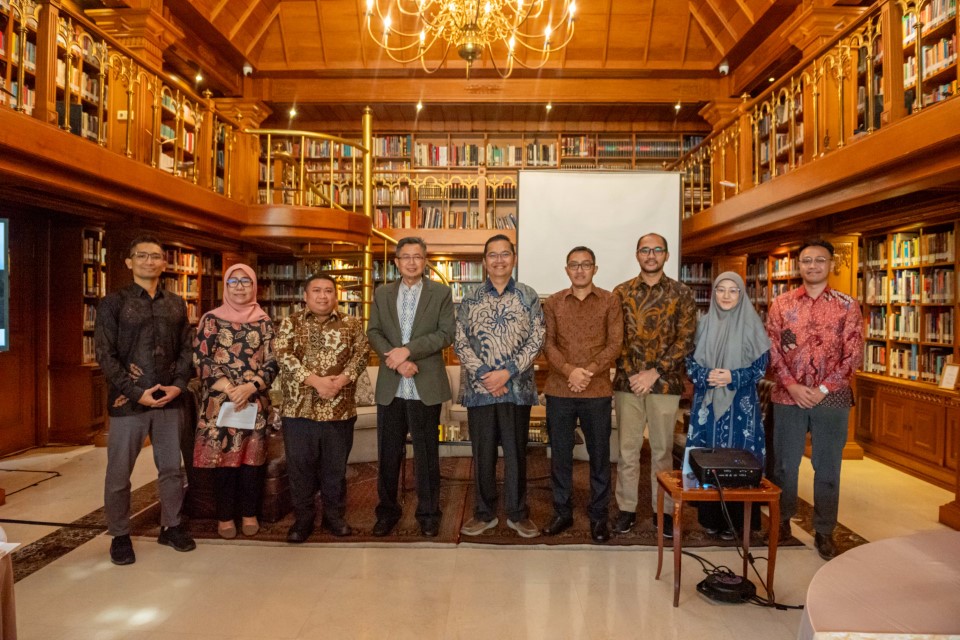
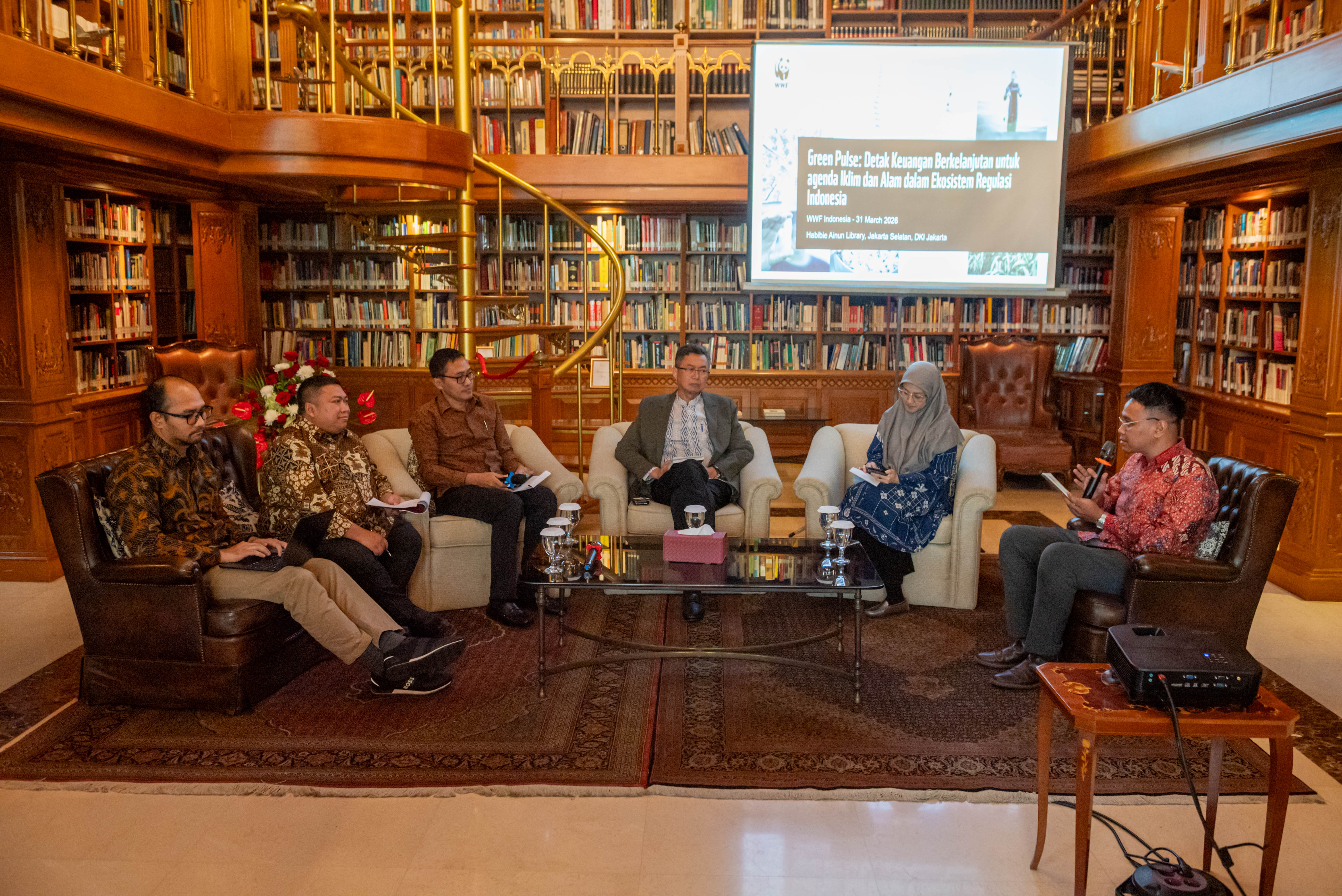
On Tuesday, March 31, 2026, at Wisma Habibie & Ainun, WWF-Indonesia held a book review event on Sustainable Finance: Public Policy Construction and Financial Services Industry Response." This activity aims to increase public understanding of sustainable finance implementation. The discussion addressed factors that influence policy effectiveness; including leadership, incentives, governance, and institutional capacity; as well as the challenges of implementing ESG on the ground.
The discussion involved various stakeholders viz: The Ministry of Finance represented by Mr. Wesly Febriayanta Sinulingga discussed the synergy of fiscal policy and financial regulation in encouraging capital flows to the sustainable sector. From the Financial Services Authority (OJK), Mr. Jarot Suroyo presented the strategic direction and continued implementation of POJK 51. Bank Indonesia (BI), through Mr. Miko Bayu Aji, highlighted the funding needs of green MSMEs and the financing instruments needed to facilitate them. Meanwhile, Ms. Rizkiasari Yudawinata from the Indonesian Accounting Association (IAI) discussed the role of disclosure in supporting the implementation of sustainable finance.
The discussion was hosted by Risyad Tri Setiaputra, Sustainable Finance Project Lead of WWF-Indonesia. and featured the banking sector represented by the Indonesian Sustainable Finance Initiative (IKBI), the Indonesian Joint Funding Fintech Association (AFPI), donor agencies, universities and CSOs.
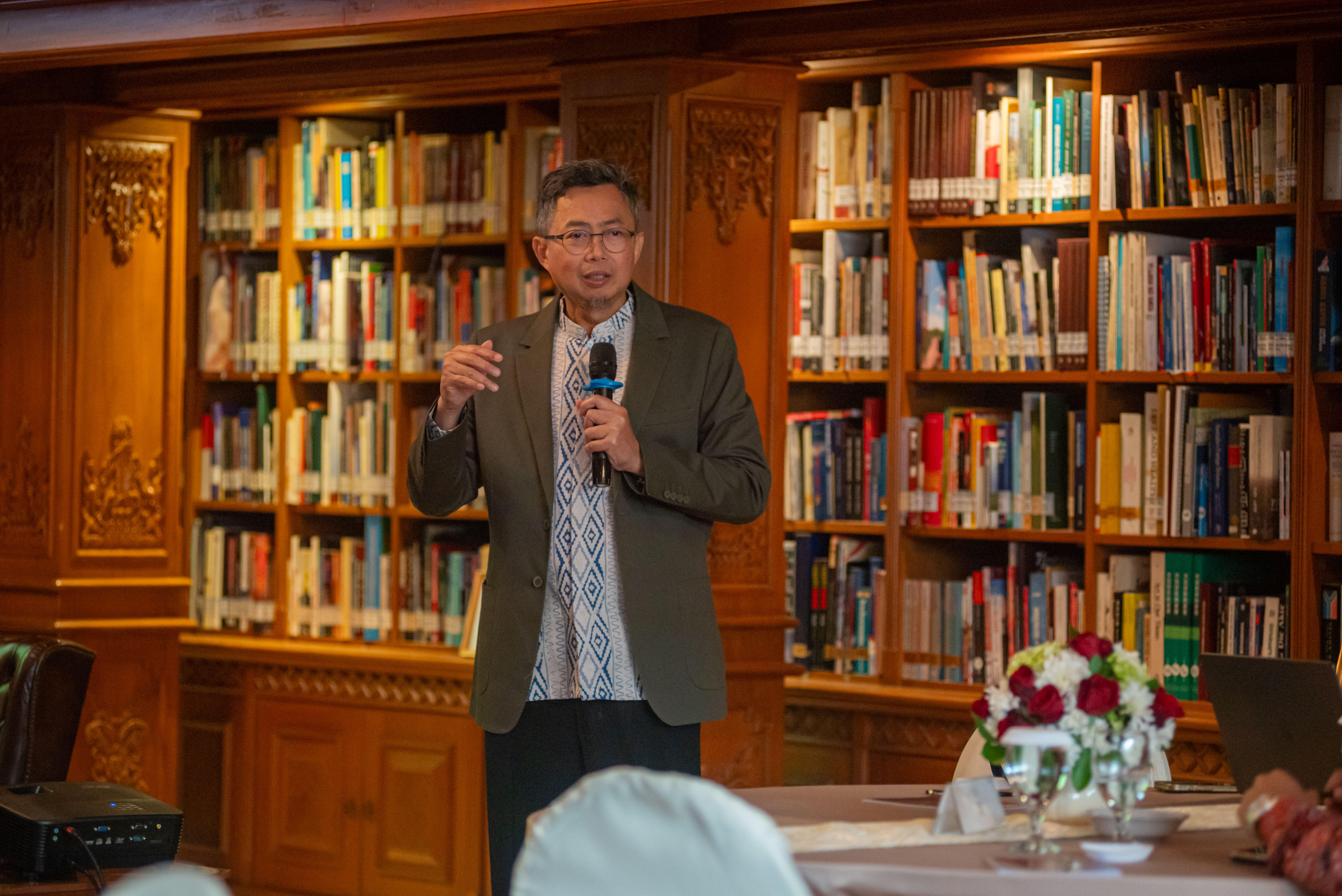
The discussion began with a review of a book by Mr. Edi Setijawan that discussed how the issue of climate change evolved from a global issue to a national responsibility: and ultimately shaped the urgency in the development of sustainability finance. In this context, sustainability finance evolved from a voluntary initiative to become part of the regulatory system.
This development is reflected through various policies; starting from the Financial Services Authority Regulation (POJK) No. 51 Year 2017 as the main foundation; followed by the introduction of Carbon Economic Value (CEV) in 2021; as well as the development of the Indonesian Taxonomy of Sustainable Finance (TKBI) to classify sustainable economic activities. On the other hand, global standards such as International Financial Reporting Standard (IFRS) S1 and S2 released in 2023 are also being gradually adopted in Indonesia towards the period of 2026 to 2027.
This set of policies demonstrates Indonesia's systematic efforts in integrating climate and nature aspects into the financial system; however, the main challenge lies not in the formulation of policies, but rather in their implementation.
Provided by publisher.
"The biggest problem in Indonesia is the weakness in the implementation of regulations, it is actually the most important stage in the process of enforcing and implementing regulations," said Mr. Edi Setijawan.
He also emphasized that the success of sustainable finance is only partly determined by the regulatory framework; while the other part depends on the implementation on the ground.

>
Mrs. Diah Suradiredja, as the Head of Policy, Advocacy, and Social Inclusion of WWF-Indonesia, emphasized the urgency of implementing sustainability finance in the midst of the global climate crisis that raises various new risks. In this context, nature is increasingly seen as a material issue, where financial risks related to nature, both physical, transitional, and reputational risks are increasingly real and need to be managed systematically by financial institutions.
"The first step is to identify actors/players that can influence the nature-positive economy, WWF-Indonesia encourages this agenda to increase positive economics for the development and protection of nature and increase natural commodities with sustainable value chains."
.
Ms. Diah also stated that WWF-Indonesia encourages the adoption of the Taskforce on Nature-related Financial Disclosures (TNFD) reporting framework, which emphasizes the importance of including natural factors as an integral part of financial decision making, both by regulators and market participants.
Meanwhile, the Ministry of Finance emphasized the large funding gap in supporting the sustainable finance agenda. To bridge this, it is necessary to optimize the role of the private sector through green financing instruments such as green bonds, fiscal incentives, and support for MSMEs. This effort is also strengthened through the preparation of derivative policies aimed at synergizing fiscal policy with financial sector regulations with OJK and BI.
From a standards and reporting perspective, IAI's Sustainable Standards Council (DSK), the implementation of the IFRS S1 and S2 frameworks adapted into the Sustainability Disclosure Standards Statement (PRSP) is seen as an important step to improve transparency. Going forward, this implementation will continue to adapt as the private sector becomes more prepared to integrate financial impacts on nature into business strategy and reporting.
>
The discussion confirmed that the sustainability finance journey cannot be fragmented. A "one-stop solution" is needed that is able to harmonize policy directions between regulators, governments, and financial institutions; not only in policy formulation, but also in consistent and measurable implementation.
This integrated approach is key to ensuring that the financial system truly serves as an enabler in the transition to a climate-resilient and nature-sustainable economy. Through closer cross-sector collaboration, alignment of standards, and strengthened accountability, sustainability finance in Indonesia is expected not only to become a policy discourse, but to materialize as a real practice that has a systemic impact.
As a way forward, strengthening the integration between nature, climate, and financial systems needs to be encouraged; not only through regulation, but also through changes in market behavior, capacity building, equal understanding from various layers institutionally between bottom-up and top-down approaches to find the mid-point, and innovation in financing instruments. This momentum is a strategic opportunity to ensure that sustainability finance can truly meet the challenges of the future.