WORKING TOWARD A ZERO-WASTE CAMPUS WITH SANATA DHARMA UNIVERSITY
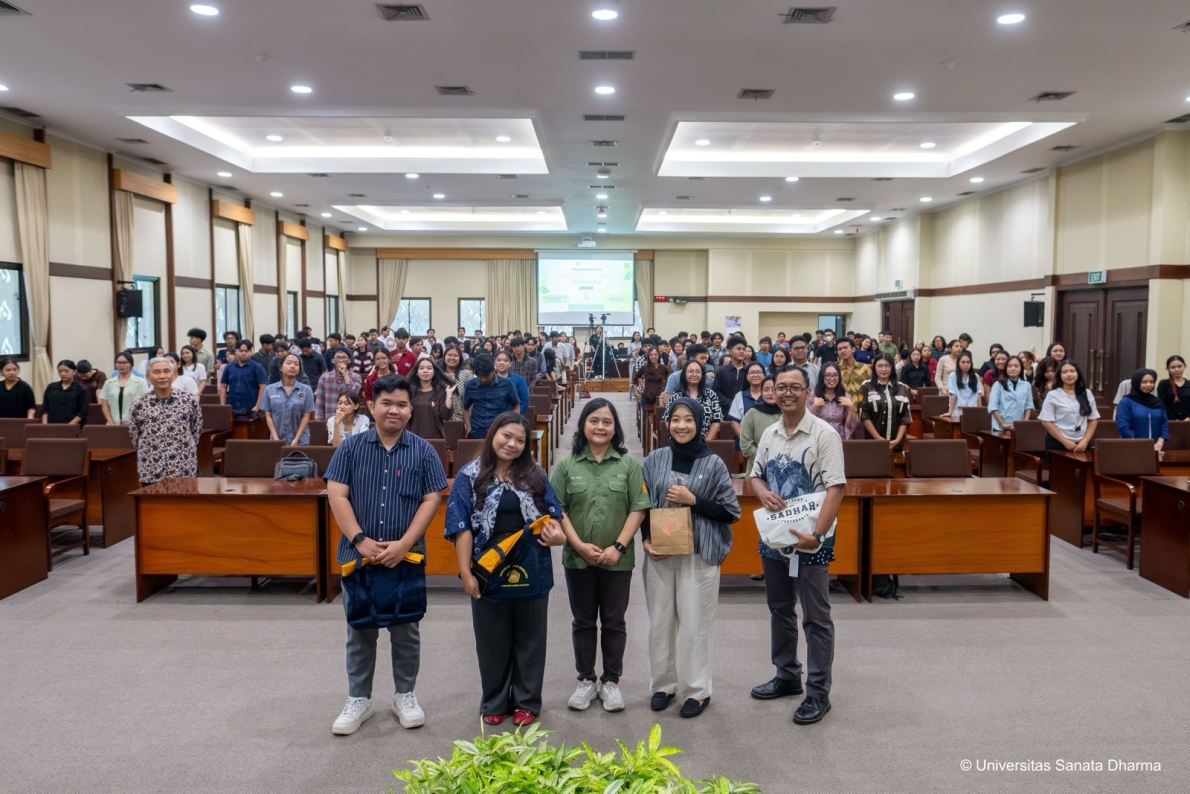
On May 23, 2026, WWF-Indonesia had the opportunity to collaborate with Sanata Dharma University at the “Formasi Cerdas Humanis II” event, with the overarching theme “Caring for the Earth as Our Shared Home.” On this occasion, WWF-Indonesia highlighted the role of biodiversity management through waste management programs and provided an overview of Indonesia’s waste situation, which remains a major challenge.
Every year, millions of metric tons of waste are generated, and the vast majority is not properly managed. According to the Organization for Economic Co-operation and Development (OECD) in its report Global Plastics Outlook: Economic Drivers, Environmental Impacts, and Policy Options (2022), global plastic production in 2019 was approximately 460 million metric tons. This figure represents a twofold increase from 234 million metric tons in 2000. Plastic waste totaled 353 million metric tons, a twofold increase from 156 million metric tons during the same period. Waste is not only a matter of cleanliness but also has an impact on the sustainability of our biodiversity. Plastic waste entering the oceans inevitably pollutes marine and coastal ecosystems, disrupts the food chain, and threatens already vulnerable species.
WWF-Indonesia’s participation in this event is part of the Zero Waste Campus program, an initiative that promotes collaboration and provides guidance to six universities in the Special Region of Yogyakarta on waste management. This collaboration is carried out through universities that are recognized as playing a major role in shaping the future.
In addressing plastic waste, WWF-Indonesia operates on three levels. At the global level, WWF-Indonesia supports the government on issues related to the Global Plastic Treaty and Extended Producer Responsibility (EPR) to promote producers’ accountability for the impacts of the products they manufacture. At the national level, WWF urges the government to strengthen circular economy-based regulations and supports the development of a roadmap for waste management. Meanwhile, at the local level, WWF is actively involved in empowering waste banks, supporting communities, and implementing the Zero Waste School program, which has reached 107 schools, 6 universities, 434 young activists, and 64,610 students.
Through this collaboration, it is hoped that the younger generation will become more aware of their role in plastic waste management and realize that small, collective, and consistent actions can bring about real change for the preservation of our environment and biodiversity.