
ASSESSING EQUITY IN SUSTAINABLE COMMODITY GOVERNANCE: FROM GLOBAL NEGOTIATING TABLES TO SMALLHOLDER FARMS
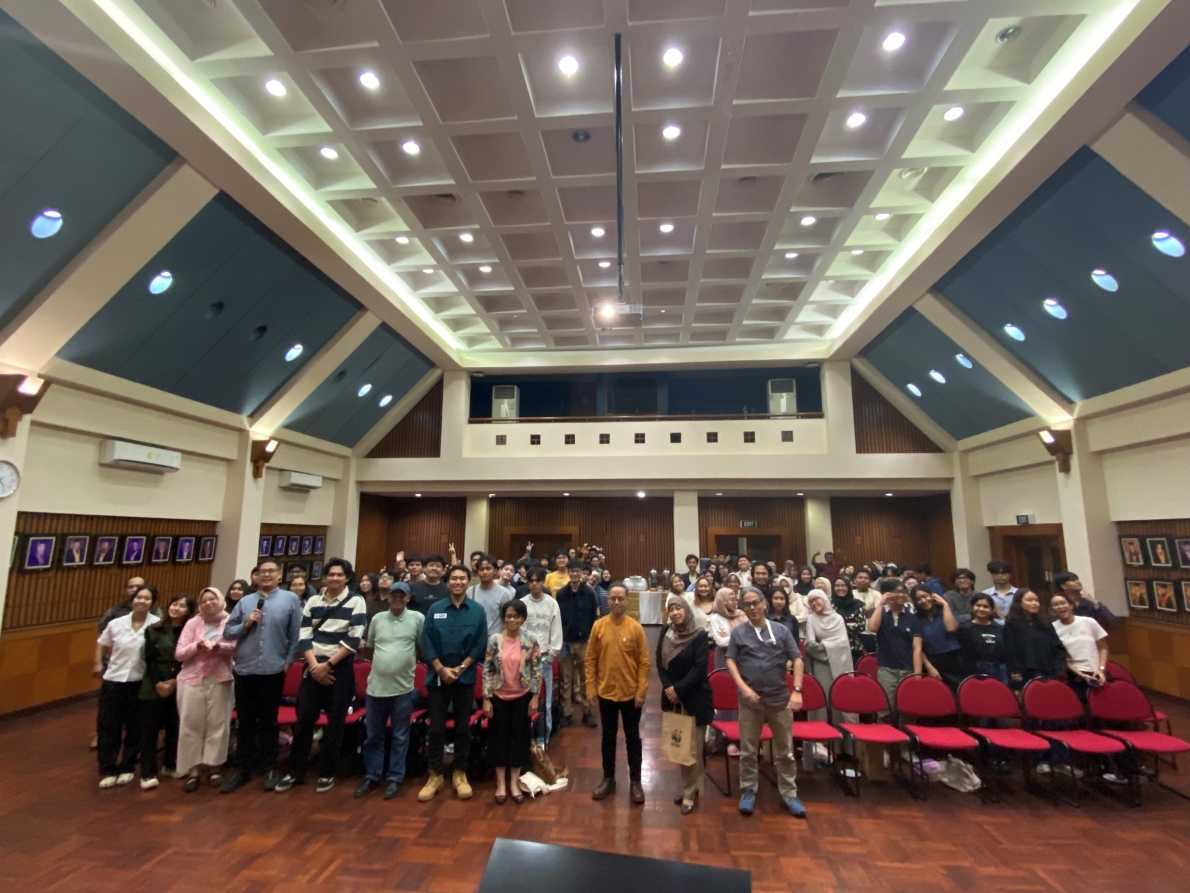
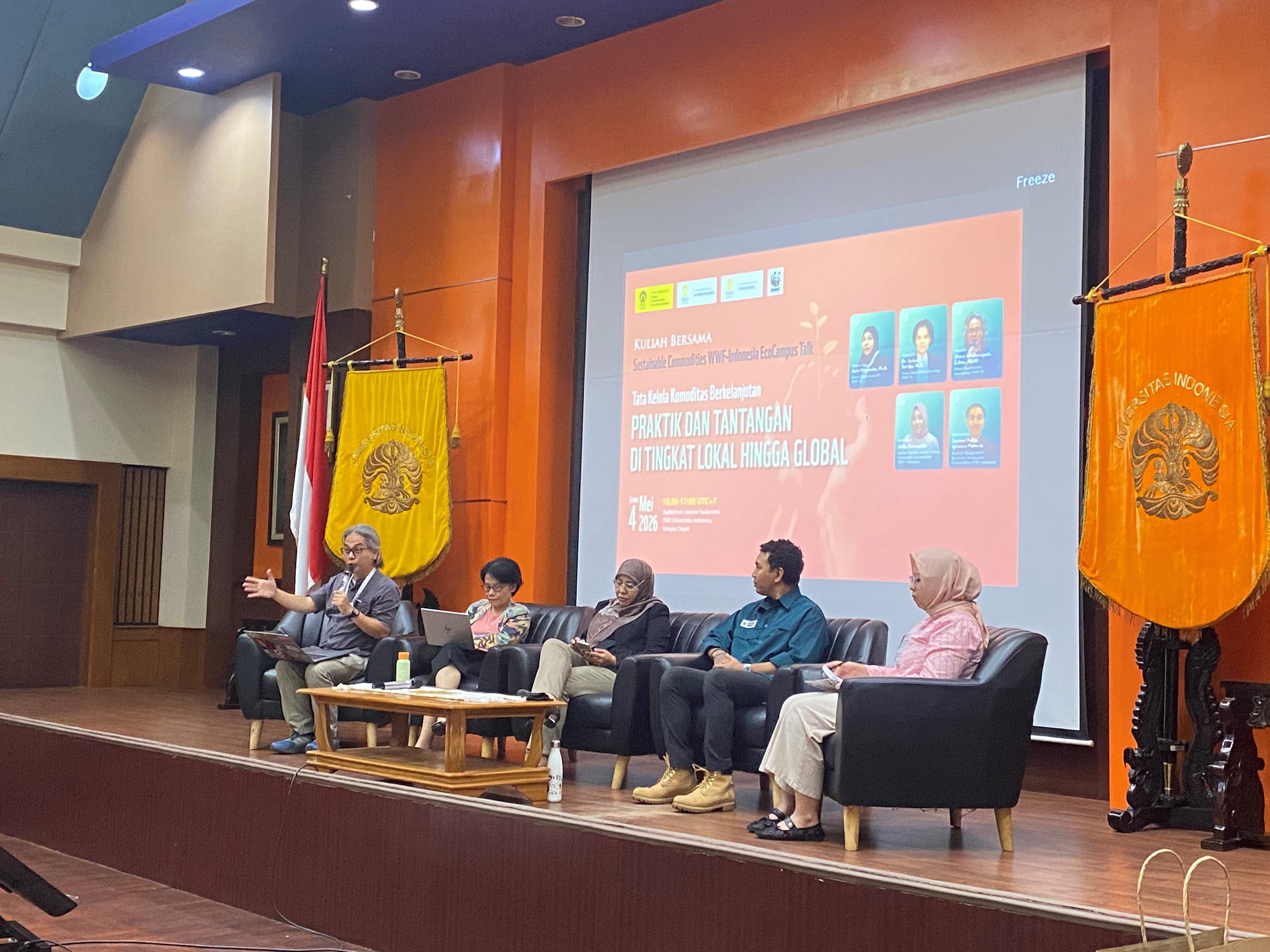
Depok, May 5, 2026 – The Juwono Sudarsono Auditorium at the Faculty of Social and Political Sciences (FISIP), University of Indonesia, hosted a discussion on the future of Indonesia’s strategic commodities. Under the theme “Sustainable Commodity Governance: Practices and Challenges from the Local to the Global Level,” academics and practitioners dissected the reality behind the “sustainable” label that now dominates the global market.
Rhino Ariefiansyah, S.Sos., MEAP., a lecturer in the Department of Anthropology at FISIP UI, broadened the discussion by emphasizing that palm oil is not merely an ordinary economic commodity. Using the conceptual framework of governmentality, he explained that palm oil governance is shaped through complex interactions between the state, the market, and global instruments such as the Roundtable on Sustainable Palm Oil (RSPO). One point of discussion was a critique of the technical approach (technical). Until now, the governance of commodities such as palm oil has tended to reduce complex issues—such as agrarian conflicts, land grabs, and the exploitation of child labor—to technical indicators that merely need to be “checked off” in administrative audits. Global sustainability standards, such as the RSPO, do indeed provide a scientific framework for the protection of human rights and the environment. However, there is significant concern that these instruments have become mere tools for market legitimization or “green branding,” thereby losing their substantive meaning. The core issue in the palm oil industry is, in fact, the unequal power dynamics between corporations, certification bodies, and indigenous communities—who are in the most vulnerable positions.
Data from the discussion shows that smallholder farmers are the main actors in the national palm oil sector, controlling approximately 40–48% of the land. However, they are the most marginalized in the sustainability discourse. One structural barrier is their dependence within the supply chain, where farmers are heavily reliant on middlemen due to limited access to processing mills and the perishable nature of oil palm fruit. This situation results in profit distribution being concentrated in the downstream sector, while farmers bear all production risks. Smallholder farmers face exclusion from sustainability certification schemes due to high costs and administrative complexity, meaning that only about 7% of smallholder production enters certified supply chains. Limited access to legal land has fueled the phenomenon of “silent expansion”—the covert expansion of land into forest areas to meet short-term economic needs—which ultimately contributes to deforestation while increasing legal vulnerability for local communities.
These conditions highlight an irony in global sustainability practices. Ironically, amid a global push toward the consumption of sustainable products, producer countries often find themselves unable to access these very products. The premium price associated with the “sustainable” label makes these commodities more accessible to consumers in developed countries, while people in producer nations continue to grapple with economic constraints. This situation creates a paradox, where those on the front lines of production are excluded from the benefits promised by the sustainability agenda itself.
From a global perspective, the concept of “sustainability” has become the dominant mantra since the inception of the 2015 SDGs. However, this discussion highlights an industry-driven bias in which the environment is often viewed merely as a byproduct of industrial process efficiency, rather than an intrinsic goal. There is a tension between developed countries (Global North) as rule-makers and developing countries (Global South) as the main producers. Global regulations are viewed as environmental standards used as instruments to control the economies of producer nations or as non-tariff trade barriers. The emergence of national certifications such as ISPO represents a form of resistance or an effort to adapt to local capacities that are often not taken into account in global standards.
The transformation of governance is now shifting from mere wildlife conservation toward direct intervention in supply chains. Through the NDPE commitment (No Deforestation, No Peat, No Exploitation), global companies are forced to conduct strict verification of their suppliers, with the threat of contract termination in the event of a violation. Although efforts toward traceability (traceability) down to the farm level continue to be developed, domestic market demand for sustainable products remains very limited compared to the European market. There has been no growth in the number of buyers willing to pay a premium price for responsibly produced commodities, so the burden of sustainability costs continues to fall on producers.
This discussion emphasizes that what the state labels as “illegal” is not necessarily viewed the same way by local communities. For many indigenous peoples, the traditional, generational land management practices they have followed are part of their means of survival, not merely a violation of the law. A more reasonable middle ground is needed on the ground—for example, by providing alternative livelihoods—so that communities no longer have to rely on forest areas to meet their basic needs. On the other hand, the certification system needs to be more equitable. We must ensure that formal legal standards do not end up displacing farmers and local communities who historically have strong ties to their land. The goal of commodity governance should no longer be to pursue a perfect solution, but rather a more realistic one: reducing violence, injustice, and inequality. The approach used also needs to change—from one that is overly technical to one that is more humane and sensitive to social conditions on the ground. Humans must recognize that, in their position as the most dominant actors in the ecosystem, they bear a moral responsibility to manage natural resources wisely, rather than merely pursuing profit.
Ultimately, the fundamental question that needs to be asked is no longer simply how to achieve sustainability, but for whom sustainability is being realized. When existing standards actually widen the gap between global and local actors, the push toward a more just system becomes increasingly urgent. Sustainability should not be a privilege reserved for those who can meet the standards, but rather a right accessible to all parties involved.