LEARNING WHILE RELAXING AT GREEN KAYEN THROUGH KNOWLEDGE SHARING SESSION AT WEDAY UGM 2026 DISCUSSING GREENWASHING AND THE FUTURE OF THE EARTH
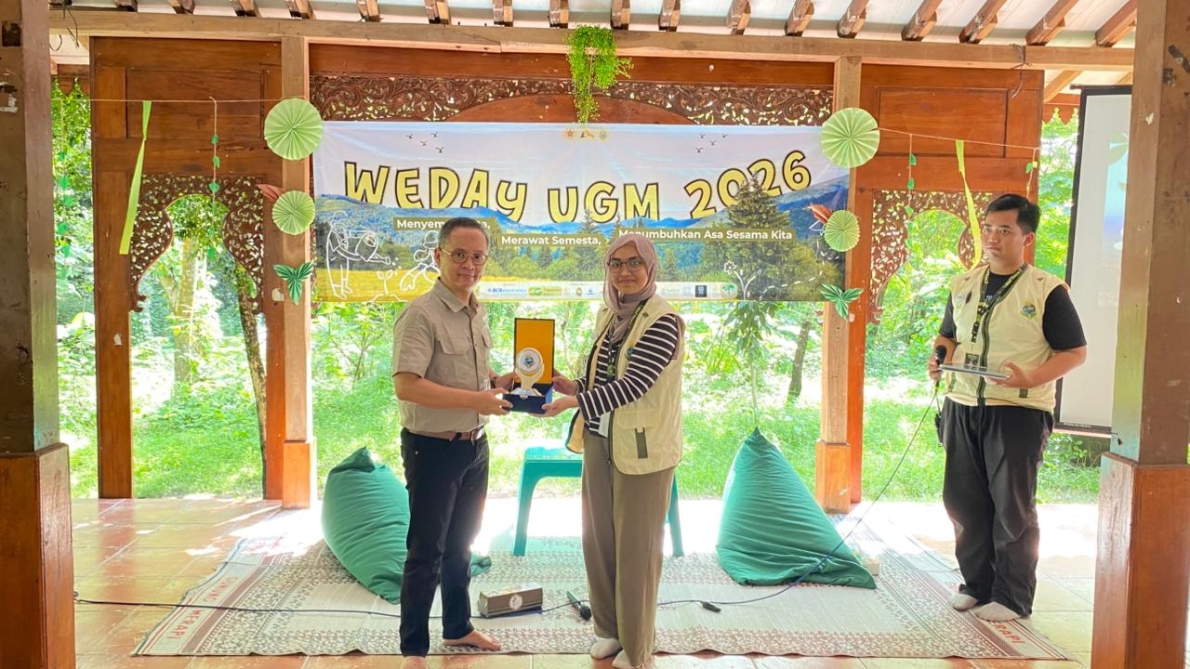
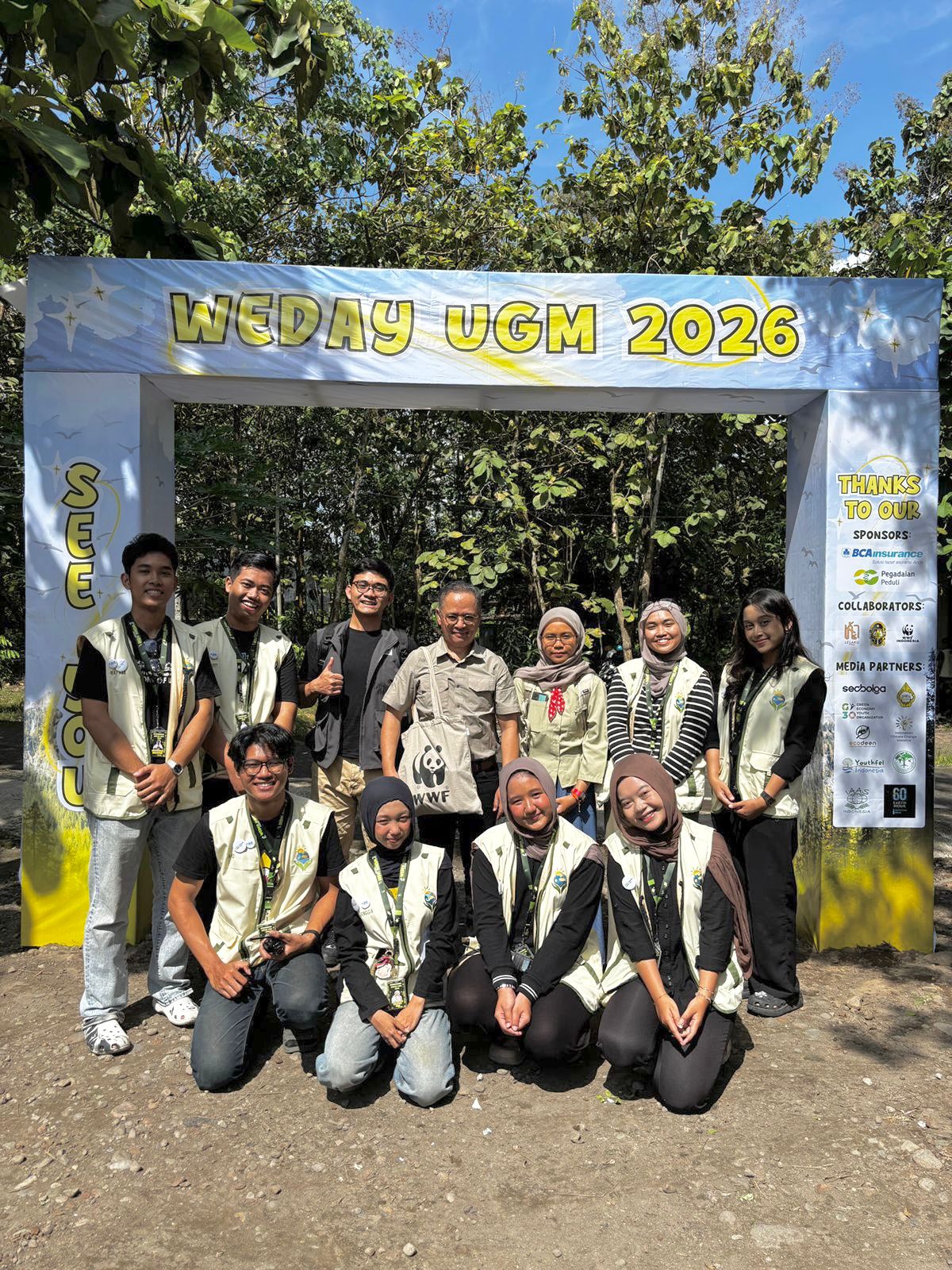
Under the lush trees of Green Kayen Tourism Village which is still beautiful in the middle of the hustle and bustle of Kaliurang Street in Sleman Regency, Yogyakarta, a knowledge sharing session was held on Sunday, May 24, 2026. This knowledge sharing activity entitled TerraTalks is part of a series of activities to commemorate World Environment Day (WEDAY) UGM 2026 initiated by BEM UGM which aims to foster critical awareness to students on the phenomenon of climate crisis through discussions and sustainable lifestyle practices. The atmosphere that morning was opened with a warm welcome from Mr. Ade Hermawan as the Head of Kayen Village who emphasized the commitment of his area to maintain Green Kayen as a green open space that is vital for the urban ecosystem. Support also came from the private sector in the field of insurance which emphasized that future protection is not only limited to financial aspects, but also the preservation of nature and the role of the private sector in contributing to environmental conservation efforts, one of which is through good business practices that pay attention to the impacts of climate change.
Entering the main session, Ari Moch Arif Climate Lead - Climate & Market Transformation Program from WWF-Indonesia, dissected in depth the challenges of climate change which have now shifted from just an environmental issue to an issue of leadership and development. The issue of climate crisis today has also experienced a paradigm that the role of leadership holds a vital position, especially in the formulation of policies and the preparation of regulations and enforcement of compliance in facing the challenges of the impacts of climate change. Through his presentation, Ari introduced Gaia Theory, a theory that places the environment as the main frame or outer circle that supports social and economic life. Practically, the environmental aspect of the theory is the focal point and has a large role and influence on social and economic aspects. In addition, he warned that the earth's temperature rise threshold of 1.5 to 2 degrees Celsius is a red line that should not be crossed, because the impact will be very destructive to the ecosystem, especially for vulnerable and marginalized groups of people who are located and live on small islands that are threatened with drowning due to rising sea levels, one of which is tidal flooding.
The main focus of the discussion then turned to the phenomenon of greenwashing, which is referred to as the "anatomy of a lie" that gives a false impression of environmental commitment. This greenwashing phenomenon tends to be paradoxical where business processes tend to act as if they care about the environment instead of only focusing on increasing profits through building a false image through the added value of labeling products "eco-friendly" "100% recycle" and many more. Ari then dissects four common tactics that are often used in greenwashing practices: misleading visual imagery of nature, symbolic tree planting campaigns without maintenance, the use of homemade certification labels, and the use of ambiguous jargon such as "eco-friendly" without scientific data support. This haphazard greenwashing practice certainly has a negative impact when drawn through environmental and socio-economic approaches. Especially for consumers, that through inappropriate greenwashing practices, it has the potential to harm consumers that the products that reach consumers are not representative of environmental conservation efforts and in business ethics this has violated the rights of consumers. As a solution to demand industry accountability, Ari explained the Taskforce on Nature-related Financial Disclosures (TNFD) approach that is being piloted to encourage transparency of business operational risks to biodiversity as a whole, which has been encouraged by WWF-Indonesia. The TNFD approach is considered to be an alternative in measuring the potential risks to finance and nature from business activities carried out such as those being carried out at the Koto Panjang Hydropower Plant. This TNFD aims to measure the risks that can occur from hydropower activities to biodiversity in the region to maintain its population, water reserves in reservoirs which are raw materials in hydropower operations are maintained and illegal practices such as oil palm planting around hydropower plants can be disciplined considering the impact of oil palm planting which results in a decrease in sedimentation and has a collective impact on the quantity and quality of water in the reservoir which if the water reserve decreases in quantity certainly affects business activities for the Koto Panjang Hydropower Plant.
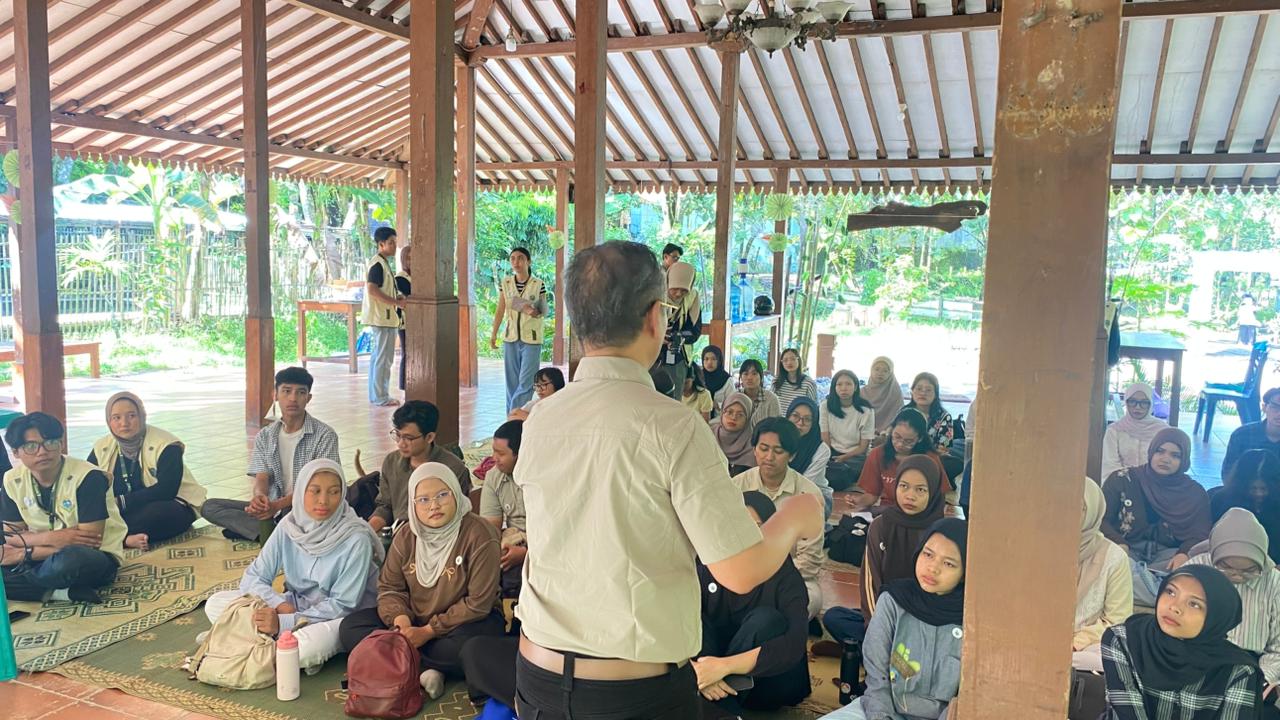
The enthusiasm of the participants peaked during the question and answer session which involved multidisciplinary perspectives. Rahsa from International Relations UGM questioned the position of environmental issues in global political confrontation, which was answered by emphasizing that Indonesia must take advantage of the momentum of green technology without being trapped in the justification of "damaged first, then rich" as the history of developed countries. Meanwhile, Jingga from Water Resources Engineering highlighted the importance of quantitative indicators such as hydrology so that industries do not just hide behind carbon counts alone.
The issue of social justice also came to the fore when Lady from the UGM Tourism department raised the issue of climate justice, where developing countries are often burdened with the responsibility of emissions that are historically produced more by developed countries. This critical question was responded with the principle of Common But Differentiated Responsibilities (CBDR), which emphasizes that climate commitments should be tailored to national capacity while still protecting the most vulnerable groups of society. Finally, Khoisa Zakia from the Environmental Health Polytechnic of the Ministry of Health Yogyakarta expressed concern over the practice of burning waste in the community due to the fullness of the Piyungan landfill, which according to Ari is a systemic problem that requires infrastructure improvements and the courage of leaders to take policies that may be unpopular for long-term impact. This comprehensive discussion was closed with a message from Ari Moch A that loving the environment does not have to reduce the comfort of life, but requires a conscious and critical change in behavior.