STRENGTHENING SUSTAINABLE FINANCIAL SYNERGY THROUGH COLLABORATION ON IKBI INITIATIVES
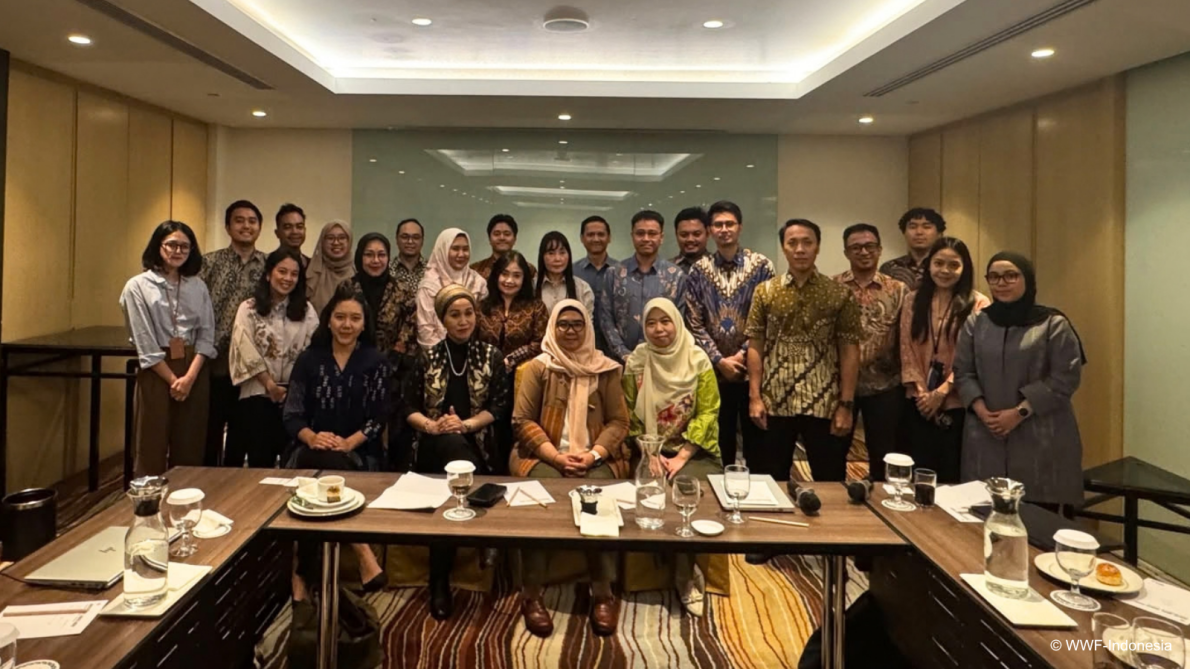
In an effort to strengthen synergies for accelerating sustainable finance practices, WWF-Indonesia, as the IKBI Secretariat, organized an IKBI Member Consolidation Meeting on September 16, 2026, at the Pullman Hotel in Jakarta.
The event began with opening remarks by Ms. Dewi Lestari, Chief Conservation Officer of WWF-Indonesia. Ms. Dewi emphasized that IKBI was established to create a level playing field at the national level, while also serving as a platform for the exchange of knowledge, experiences, and best practices. Therefore, IKBI’s synergy must continue to be strengthened so that it can serve as a complementary forum that connects various existing initiatives and fosters concrete collaboration.
Ms. Dewi also stressed that the sustainable finance agenda must go further, focusing not only on climate issues but also on nature and biodiversity. The protection of nature and biodiversity is highly relevant to Indonesia, where approximately one-third of the Indonesian economy depends on nature (World Bank, 2020). At the same time, development and economic activities also place pressure on nature. This situation reflects that environmental degradation can pose economic and financial risks which, if material and concentrated, have the potential to impact the stability of the financial system. The Task Force on Nature-related Financial Disclosures (TNFD) was established to provide a global framework for companies and financial institutions to assess and report on their dependencies on, impacts on, risks related to, and opportunities arising from nature. However, the integration of nature-related aspects should not stop at disclosure but must also gradually become part of financial institutions’ governance, risk management, and financing and investment decisions.
As part of efforts to promote the integration of nature-related aspects, a professional organization is also addressing environmental crime in the context of Environmental, Social, and Governance (ESG) integration. Financial institutions’ exposure to borrowers or business activities that carry risks related to environmental crime, such as illegal logging, illegal mining, illegal fishing, and illegal wildlife trade, can give rise to reputational, legal, compliance, and credit risks. Thus, from the perspective of this professional organization, environmental crime is not merely an environmental issue but can also be a source of risk that must be taken into account in the process of identifying, assessing, monitoring, and mitigating ESG risks by financial institutions.
On the other hand, strengthening climate-related aspects has become a key focus in the development of sustainable finance in Indonesia. As stated by Mr. Jarot Suroyo, Senior Deputy Director of the OJK’s Sustainable Finance Directorate, the OJK is currently updating POJK 51/2017, which is targeted for publication in the fourth quarter of 2026.
This update is a follow-up to the mandate of the P2SK Law and part of the OJK’s efforts to strengthen the framework for implementing sustainable finance and align sustainability disclosures in the financial services sector with developments in international standards, particularly PSPK 1 and PSPK 2, which adopt IFRS S1 and IFRS S2.
Through this update, entities in the financial services sector will be required to submit a Sustainable Finance Action Plan (RAKB) and a Sustainability Report in accordance with the provisions and implementation phases established by the OJK, as well as the obligation to apply the Indonesian Taxonomy for Sustainable Finance (TKBI) through the disclosure of TKBI metrics. This update to the OJK Regulation also strengthens the role of the Sustainable Finance Action Plan (RAKB) to accommodate transition plans as part of a strategy toward more sustainable business operations.
As part of a complementary policy ecosystem, the OJK is also continuing to develop a climate risk management framework for the banking sector through the next version of the CRMS by adding scenarios that take into account Indonesia’s characteristics and context, as well as preparing transition plan guidelines to support financial institutions in developing credible transition plans.
These regulatory developments also indicate that the next challenge is not merely regulatory readiness, but how financial institutions translate these requirements into governance, risk management, portfolio strategy, and financing decisions.
During the discussion, participants shared their experiences in implementing CRMS and calculating GHG emissions, although the scope and depth of these efforts varied. Key challenges include the availability and quality of data, as well as the integration of analysis results into risk management processes, including credit risk assessment and financing decisions. This highlights an implementation gap between the development of sustainable finance frameworks and the capacity to integrate them into day-to-day business processes and decision-making.
In addition, members also shared challenges in implementing TKBI-based reporting. Capacity constraints and coordination gaps between headquarters and branch offices were among the challenges identified. Therefore, members emphasized the importance of IKBI serving as a platform to facilitate outreach and technical training needs, as well as coordination with relevant ministries and agencies, so that industry players in the real sector can gain an adequate understanding of TKBI.
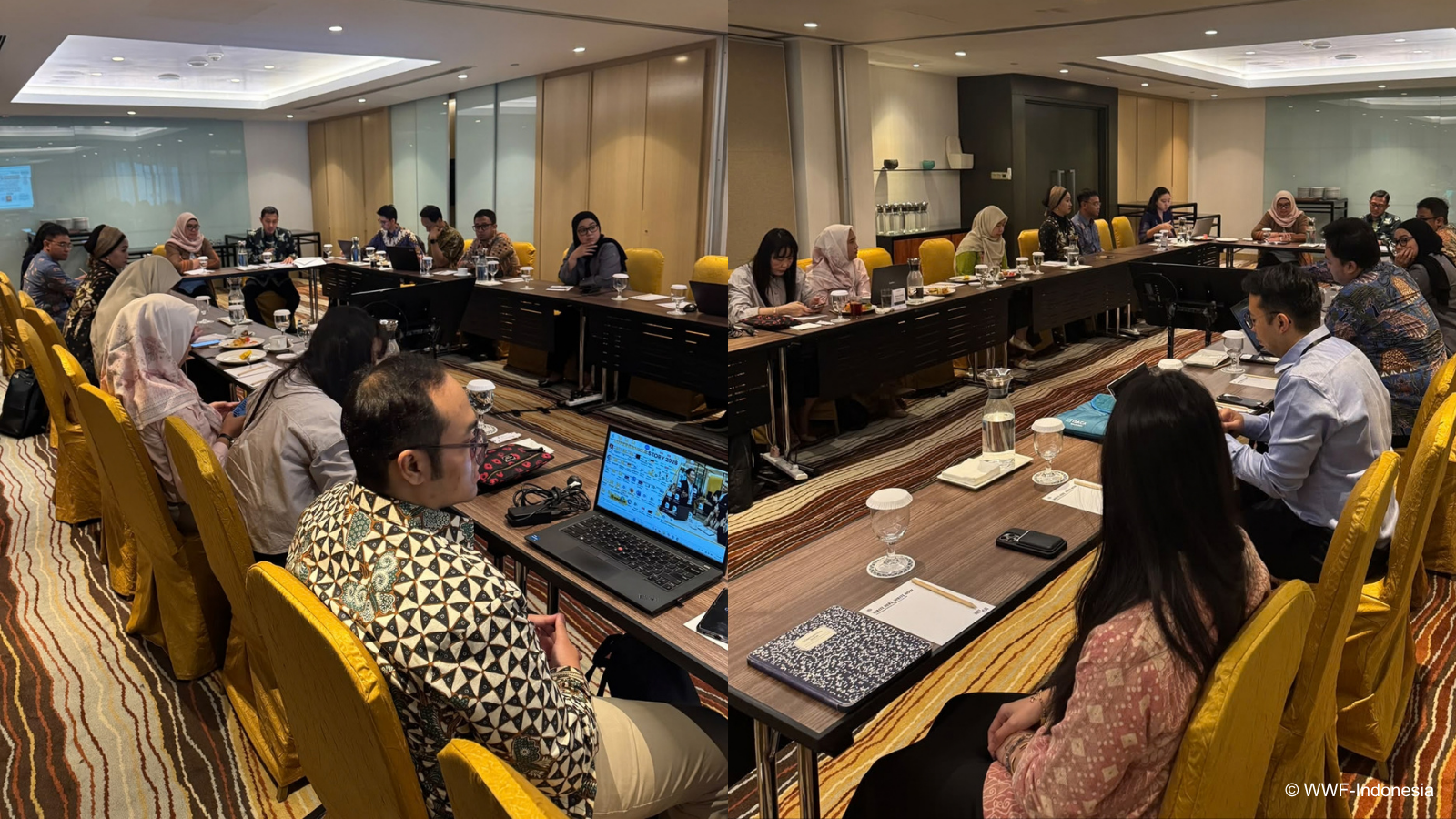
The OJK welcomes this and hopes that platforms such as IKBI can serve as a forum to enhance sustainability efforts and prepare financial institutions to meet future expectations and trends in sustainable finance, including through capacity building, the development of guidelines, the implementation of pilot projects, and other initiatives.
Moving forward, IKBI’s added value will extend beyond mere knowledge exchange among members to include how IKBI can bridge the gap between regulation and implementation. Through collaborative learning, pilot projects, capacity building, and dialogue with regulators and the real sector, IKBI can help drive sustainable finance from compliance toward risk management and the mobilization of financing that delivers tangible impacts for the climate, nature, and society.
At the same time, the transition toward sustainable finance must ensure that climate and nature risk management also considers its impact on communities, including those whose livelihoods depend heavily on natural resources.
Indonesian Sustainable Finance Initiative
The Indonesian Sustainable Finance Initiative (IKBI) is a multi-stakeholder platform established on May 31, 2018, to accelerate the implementation of inclusive sustainable finance in Indonesia.
IKBI employs a three-pillar approach to create a level playing field for financial institutions to achieve sustainability goals such as the Sustainable Development Goals (SDGs), the Paris Agreement, and the Global Biodiversity Framework (GBF), through enhanced ESG integration, capturing business opportunities and mobilizing financing, as well as developing solutions.
IKBI Members: BRI, Mandiri, BCA, BNI, CIMB Niaga, BSI, BTN, BJB, SMBC, HSBC, Muamalat, Maybank, Panin Bank, OCBC NISP, PT. Sarana Multi Infrastruktur, WWF-Indonesia (Secretariat).