THEIR JOURNEYS TO PROTECT THE FOREST
Community Stewardship in Kayu Bunga
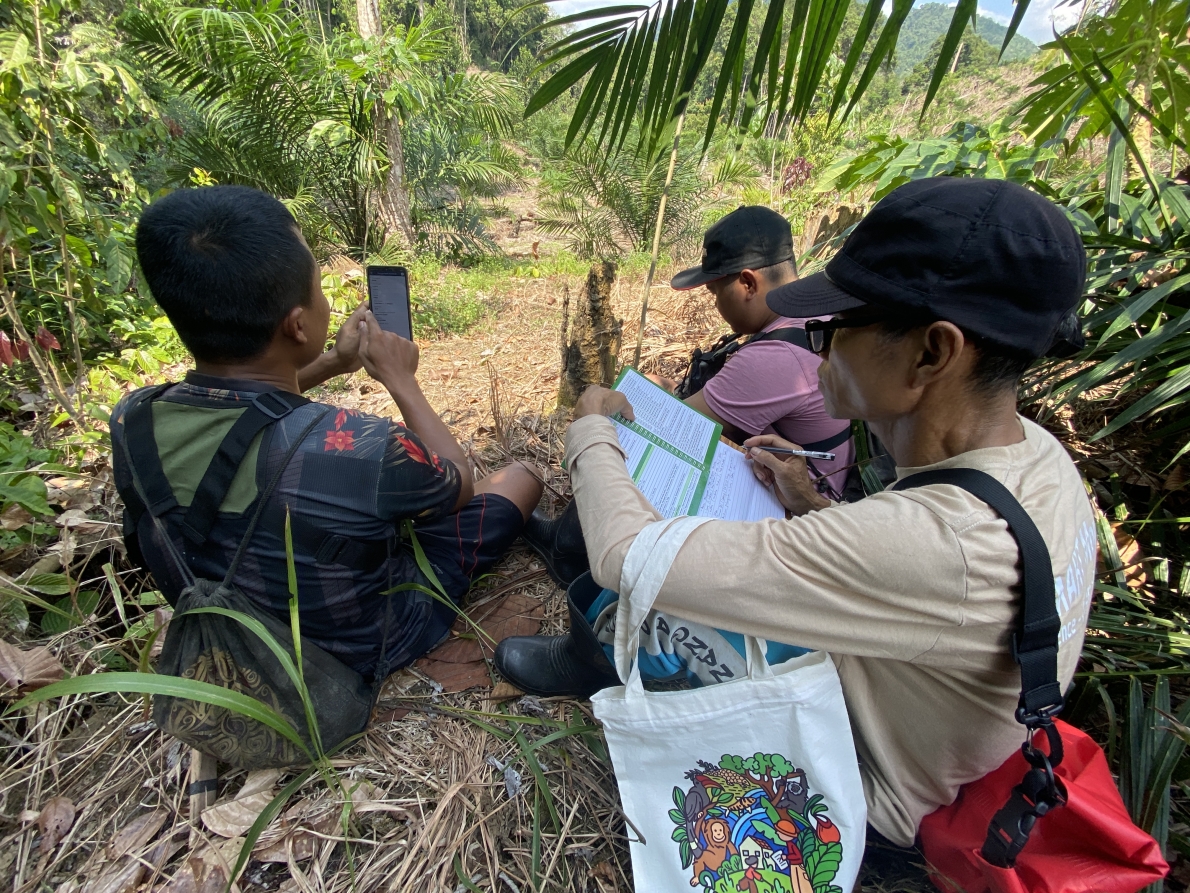
The morning mist still clings to the hills surrounding Kayu Bunga Village as Sudarto and three other community members prepare for another forest monitoring patrol. Their tangkalang (traditional bag made of rattan) is filled with supplies for the next three days: food, notebooks, a GPS device, SMART monitoring and photography equipment, and basic gear for a flying camp.
Melawi, where Kayu Bunga is located, along with Sintang, Ketapang and Sekadau District, is part of Arabela Landscape’s 1,68 million hectares, with 57% forest cover still intact. It is also one of the primary habitats for the Kalimantan orangutan (Pongo pygmaeus wurmbii) and ‘home’ to other species such as gibbons, helmeted hornbills, pangolins, and sun bears.
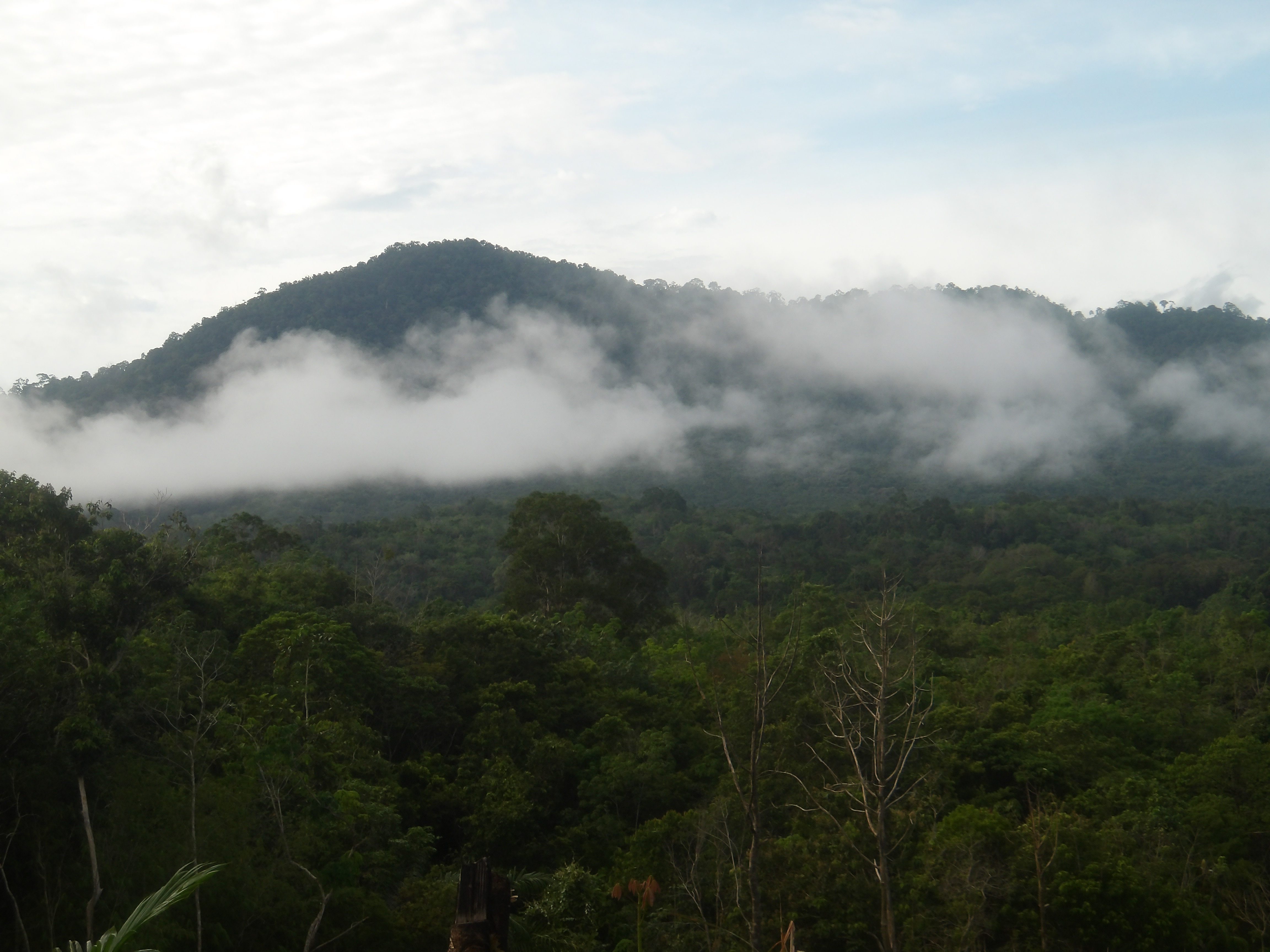
The journey ahead will not be easy for Sudarto and co. To reach their monitoring location, they must walk for nearly a full day through steep terrain, crossing streams and ascending forested hills before spending the night beneath the lush forest canopy.
However, all of these challenges are outweighed by the purpose they are striving to achieve. For Sudarto, every step represents part of an effort to safeguard the forest, which has long served as a source of livelihood for the community across generations.
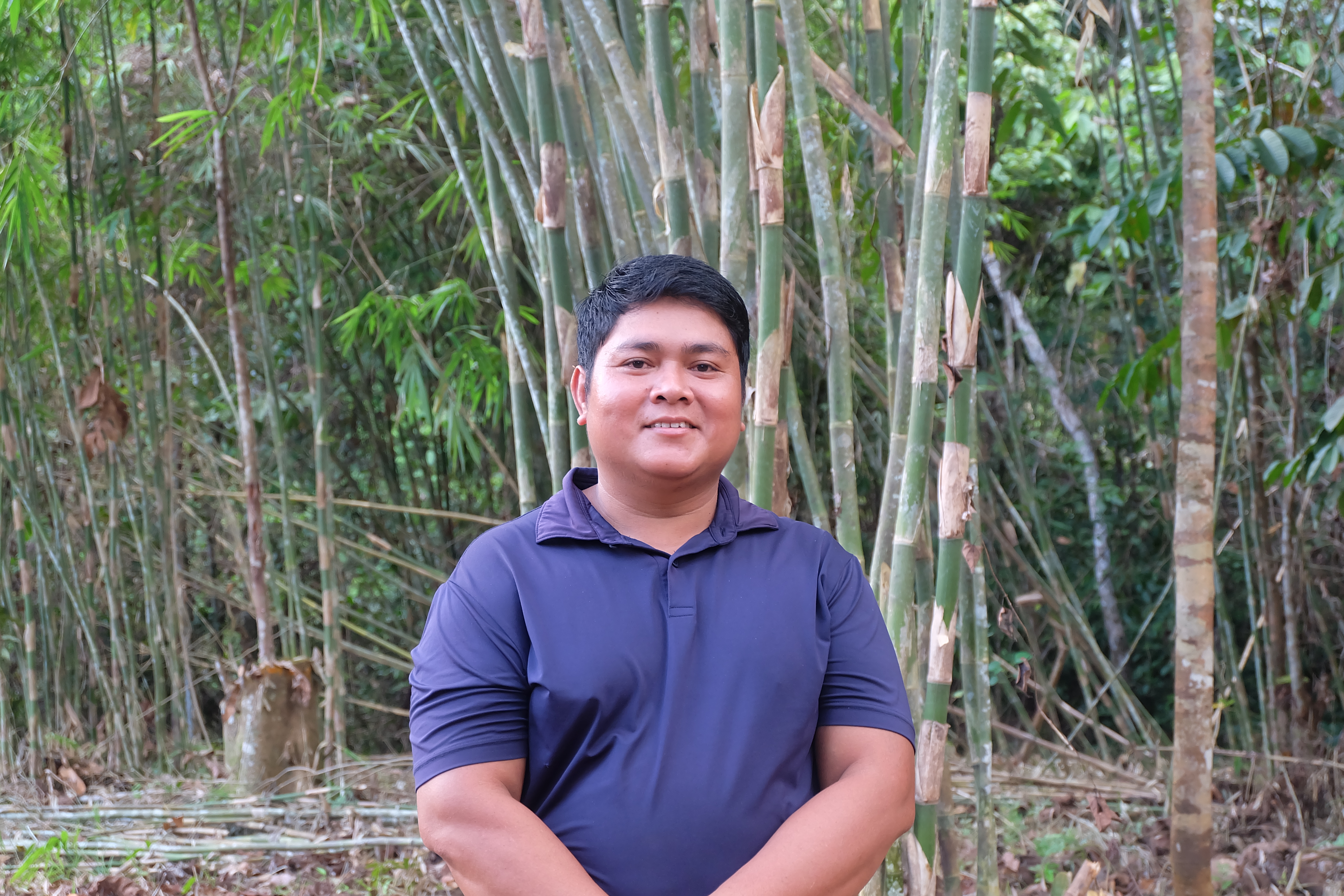
For the Kayu Bunga community, the forest is home. This value is reflected in the name of the Village Forest Management Institution named Laman Kepayang, which means “home” in the Dayak Kebahan language, one of the sub-ethnic groups of the Dayak. As head of the institution, Sudarto, together with the community, continues to advocate for sustainable forest management through the Social Forestry initiative.
With support from the government and WWF-Indonesia, they have initiated the Laman Kepayang under the Social Forestry’s Village Forest scheme, covering 4,434 hectares, and the Customary Forest scheme for the Toli Menuah–Selantan, covering 5,773 hectares. The community is currently completing necessary data and documentation as part of the process for submitting both recognition to the government.
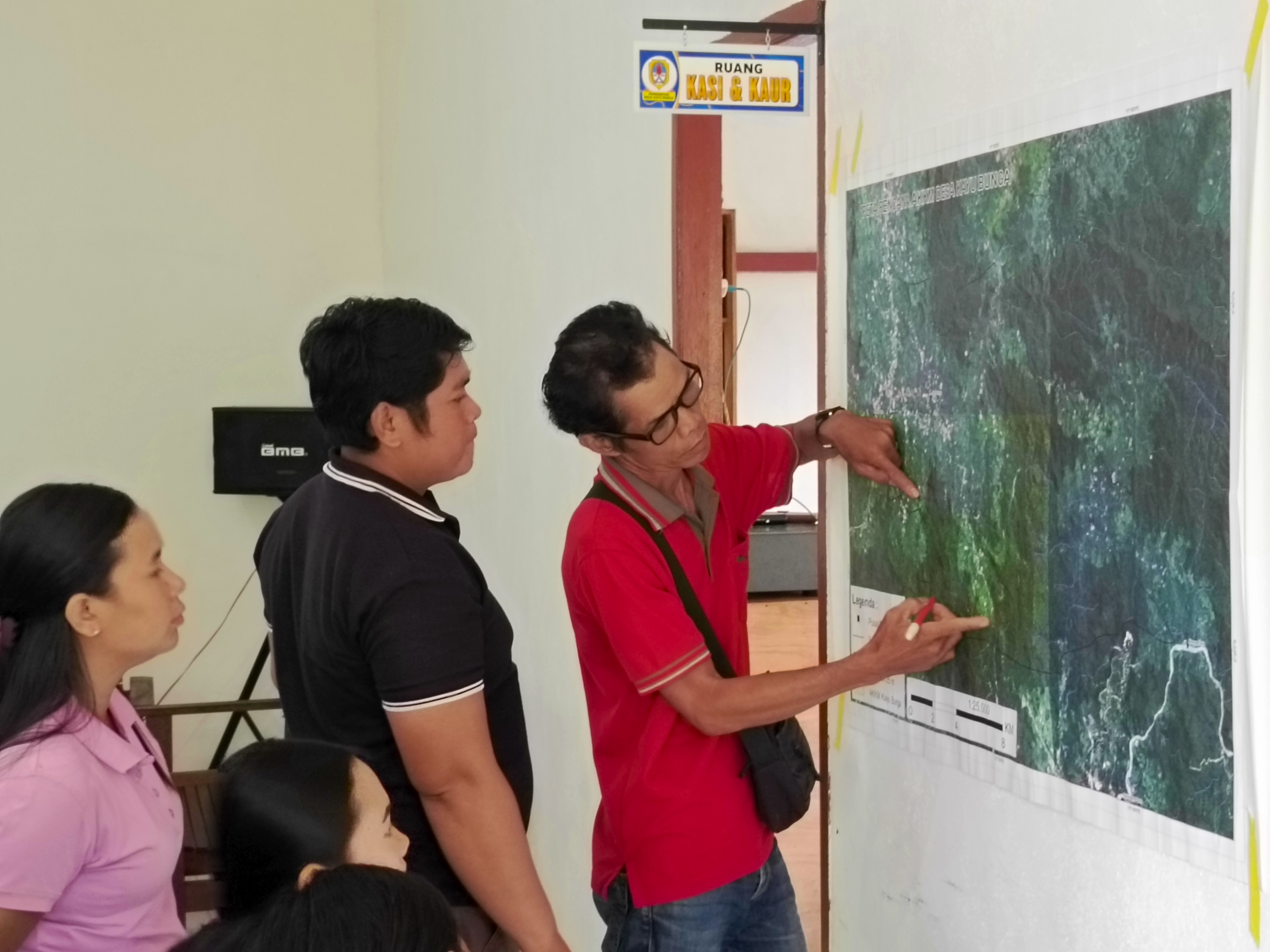
Forest is beyond a mere ‘landscape’ for Sudarto and Kayu Bunga. It is their source of life, a space filled with memories, and a legacy to be preserved for future generations. “The forest is important because our children and grandchildren should still be able to see it in the future. They should be able to experience wildlife, large trees, and all the things that make this place special,” says the father of three, hopeful.
For generations, the Kayu Bunga community have depended on the forest. Community members collect rattan and tap resin, harvest fruits such as durian, stinky bean, and jengkol–a type of dogfruit, gather timber for building houses, and rely on the forest's streams for clean water. It has long supported livelihoods while also shaping local culture and identity.
Sudarto reminisces about when the forest felt more abundant than it does today. During fruiting season, villagers could easily find wild fruits throughout the forest, and wildlife encounters were common, including orangutans, gibbons, and hornbills.
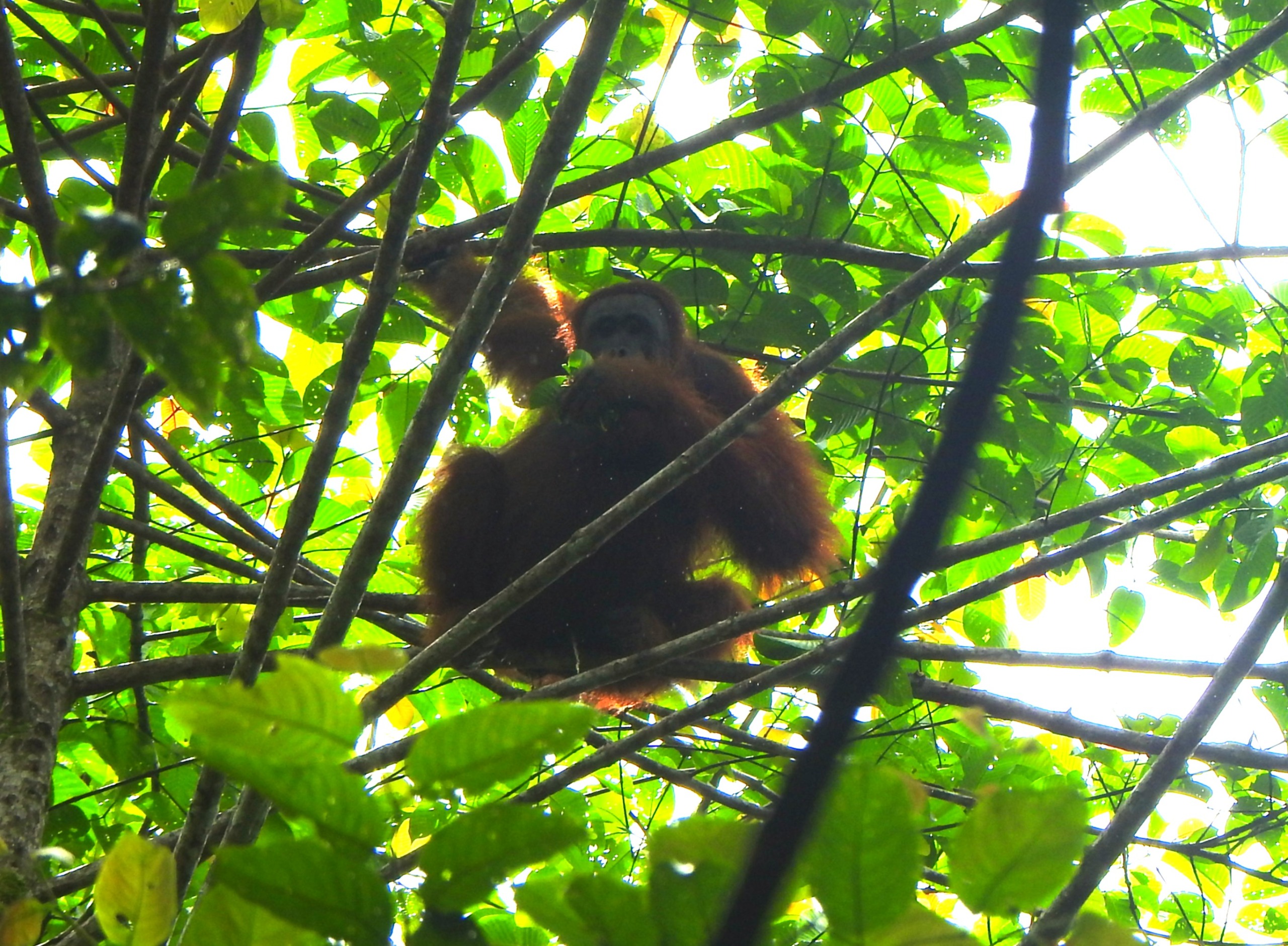
Entering the forest often brought surprises: hidden caves, streaming waterfalls, the clamorous sounds of wildlife moving through lush trees, and the enthusiastic noises they made as they stepped on dried leaves.
“Years ago, it was much easier to find wildlife and forest fruits,” he recalls. “Now, some of those things are becoming harder to find.”
Over time, increasing pressure on the forest began to take its toll. Logging, hunting, and land clearing gradually reduced the abundance of resources that some members of the communities had once taken for granted. For many years, access to the forest was largely unrestricted, allowing not only the local community but also outsiders to enter and extract resources. Although the changes happened gradually, their impacts became impossible to ignore. And everything changed in 2021.
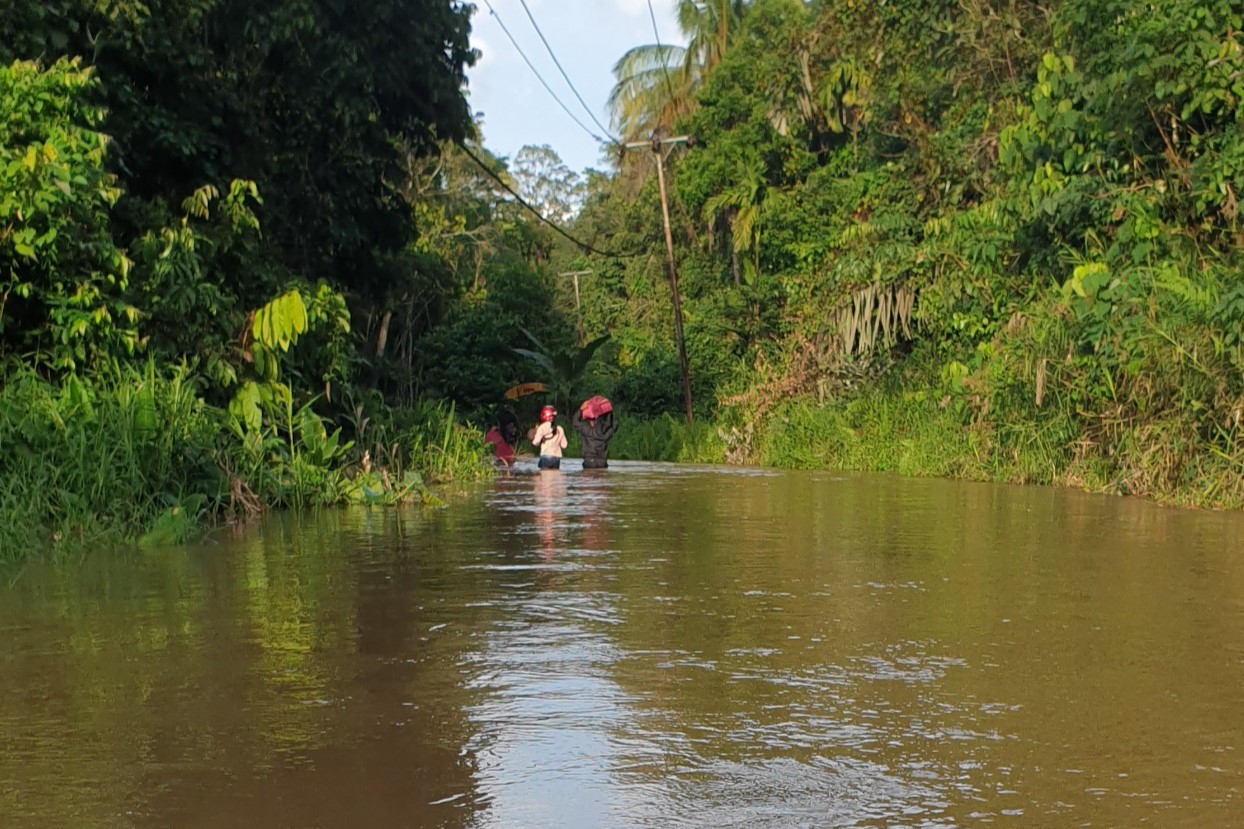
That year, severe flooding struck Kayu Bunga Village. Farms and gardens that families relied on for food and livelihood were damaged. Crops were lost, and many households had to begin working on their fields again from scratch.
The disaster became a painful lesson for the community. Many villagers began connecting floods to years of forest clearing in upstream areas. Hillsides that once absorbed rainfall had been gradually cleared for agriculture, reducing the landscape's ability to regulate water flows during periods of rainy season.
For Sudarto, the flood changed how many people viewed the forest. “The flood affected our gardens and farms. People lost what they had planted and had to start over. It showed us that we cannot continue clearing forests in the upper watershed.”
Following the disaster, village leaders and community members took action. New rules were introduced to prevent agricultural expansion into forested hills. Rather than opening new land, farmers were encouraged to continue cultivating areas that had already been used previously. Community awareness about the importance of protecting the forest also began to flourish.
The changes may seem simple, but they represent an important shift in how people view the relationship between forests and their own well-being. Today, that growing sense of responsibility is reflected in the work of community forest patrols like Sudarto.
Every month, monitoring teams patrol both the village forest and the customary forest areas; two types of schematics under the Social Forestry initiative. Working in rotation, they spend several days documenting conditions within the forest, recording wildlife signs, identifying potential threats, and collecting information to support local forest management.
The work is physically demanding. From heavy rainfall that often turns trails into slippery paths to the physically challenging, or hot, dry climate, which increases the risk to their health and safety, reaching monitoring locations requires long hours of walking across rugged terrain.
Yet despite these challenges, members of the community remain committed. What motivates them is not only the conviction to protect the forest today but also the hope of ensuring its future: their future.
While direct encounters with illegal activities are rare, the monitoring team frequently discovers evidence left behind. Hunting traps, signs of illegal mining, and traces of unauthorised resource extraction remind them that threats to their forest are, indeed, real.
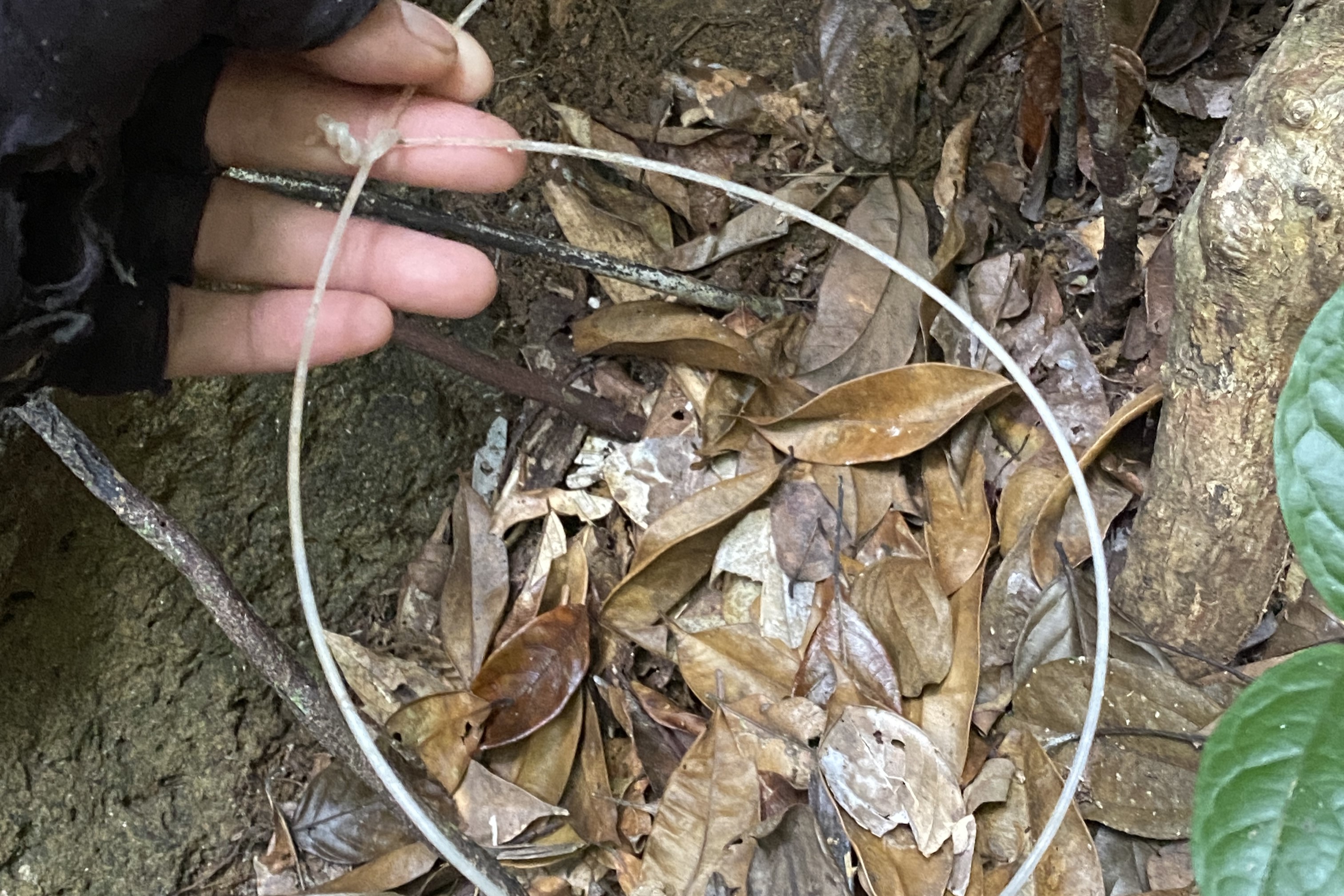
Yet monitoring patrol is not only about identifying threats. It is also about deepening people's connection to the forest itself. One of Sudarto's most memorable experiences came during a monitoring trip to a remote part of the forest, where he finally visited Gunung Berasap Waterfall. Although he had heard stories about the waterfall throughout his life, he had never seen it with his own eyes.
Standing before the cascading water hidden deep within the forest, he felt a renewed sense of pride in the natural beauty ‘living’ in Kayu Bunga. “It was amazing,” he says. “I had only heard about it from other people before. Seeing it directly made me appreciate our forest even more.”
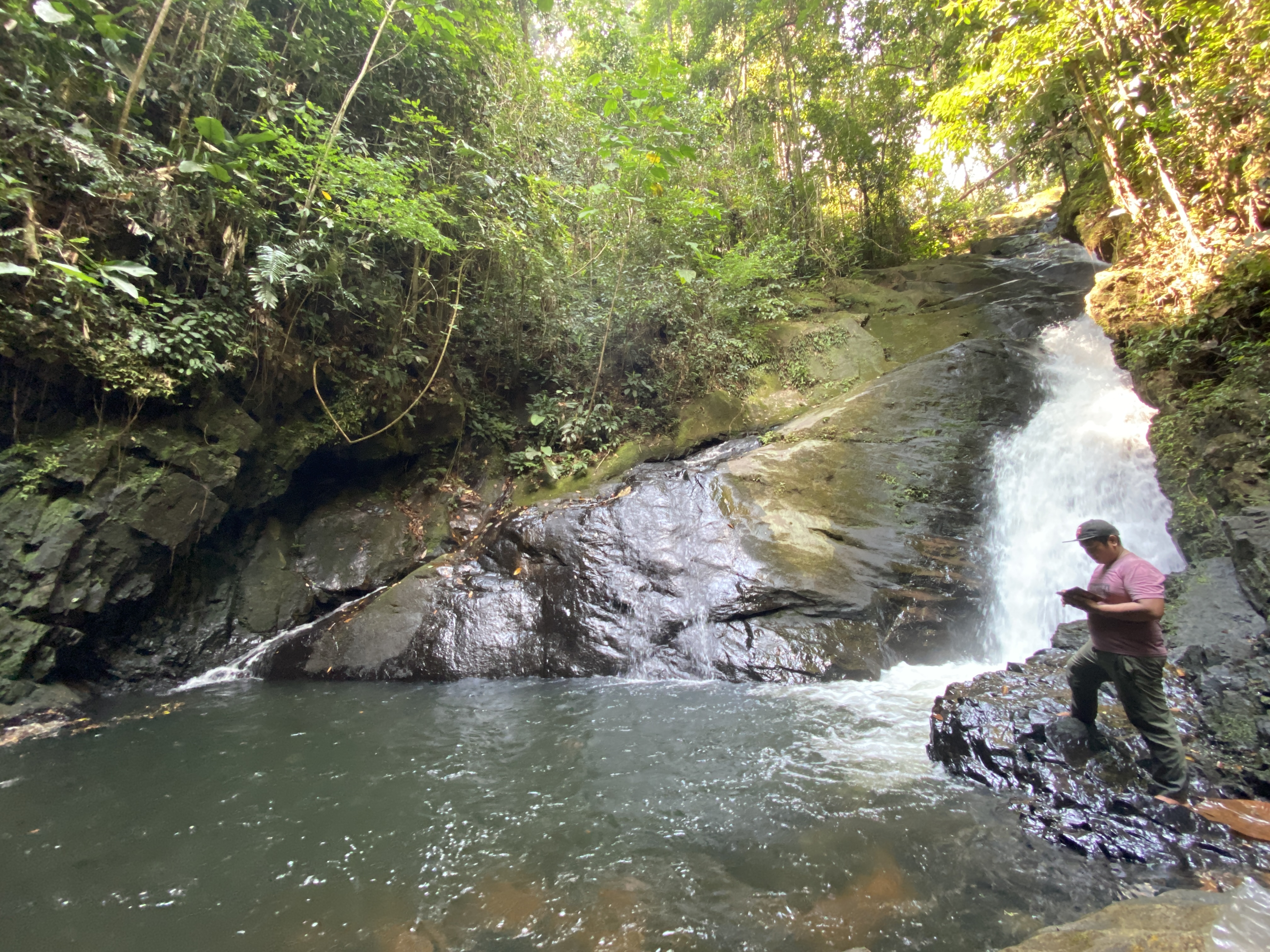
Each monitoring patrol reinforces community involvement in the importance of nature preservation and conservation. “Protecting the forest is not something one person can do alone,” as Sudarto continues, “it requires all of us.”
That appreciation is something he now tries to share with others through Panda CLICK!, a citizen journalism programme that enables community members to document and tell stories about their environment.
Using cameras and mobile phones, Sudarto captures images of forest landscapes, unique plants, community farming activities, and traditional practices. Through these photographs, local people become storytellers, sharing perspectives that are often overlooked.
The images reveal more than beautiful scenery. They tell the story of a community whose lives remain deeply connected to the forest. They show that conservation is not only about protecting trees and wildlife. It is also about protecting livelihoods, preserving culture, and securing their future.
“The forest must remain protected,” he says. “I hope our children and grandchildren will continue taking care of it, so it will always be here for them.”
For Sudarto, every patrol, every photograph, and every step through the forest is an investment in that future—a future where people and nature coexist in Kayu Bunga.
As Sudarto looks ahead, his hope remains unchanged. He dreams of a future where the forests of Kayu Bunga remain healthy and intact, wildlife survives and thrives, clean water continues to flow from the hills, and future generations can sense the same wonder he feels whenever he enters the forest.
“The forest has given us so much. I hope our children and grandchildren will continue taking care of it, so it will always be here for them.”
(Sudarto, Head of Laman Kepayang Village Forest Management Group
Building Future Through Restoration
At dawn in the secluded Penyuguk Village, Anastasi Eva rises to begin her daily routine: cleaning the house, preparing meals, and caring for her elderly father before heading to the agroforestry restoration site.
By midday, while others might be taking a break, Eva is already on her way to the site. She checks seedlings, prepares planting materials, and joins other women in maintaining the village’s agroforestry demonstration plot.
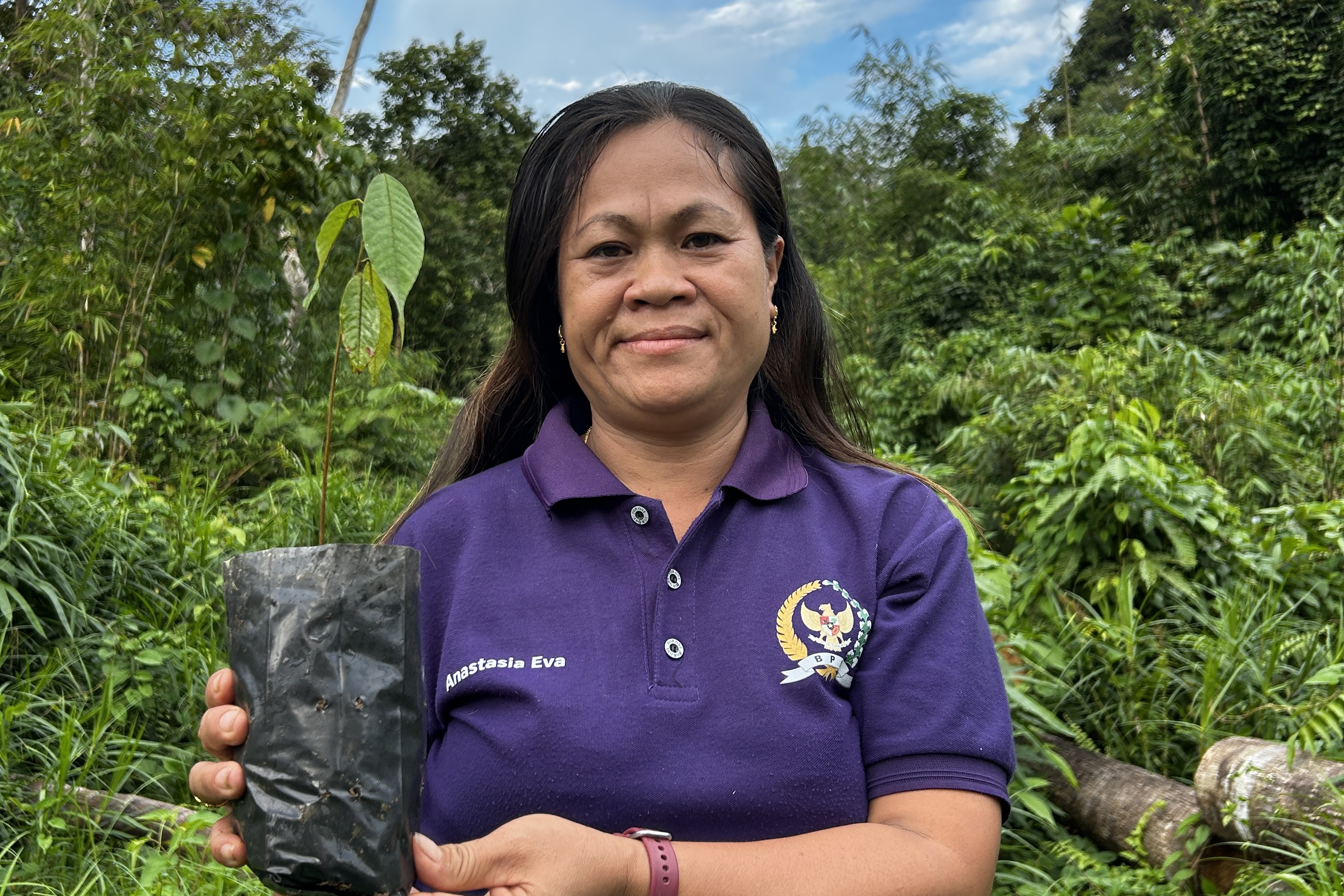
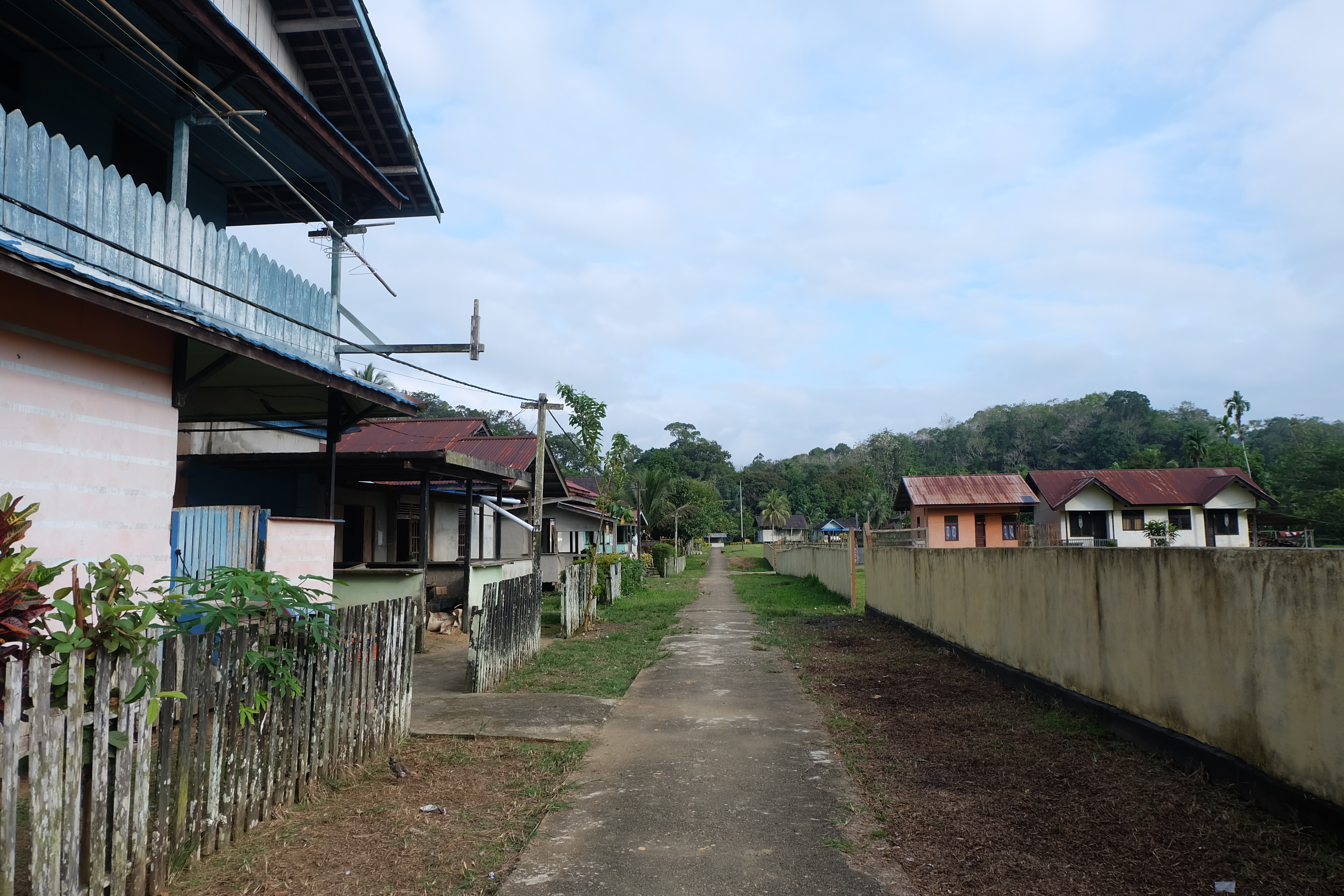
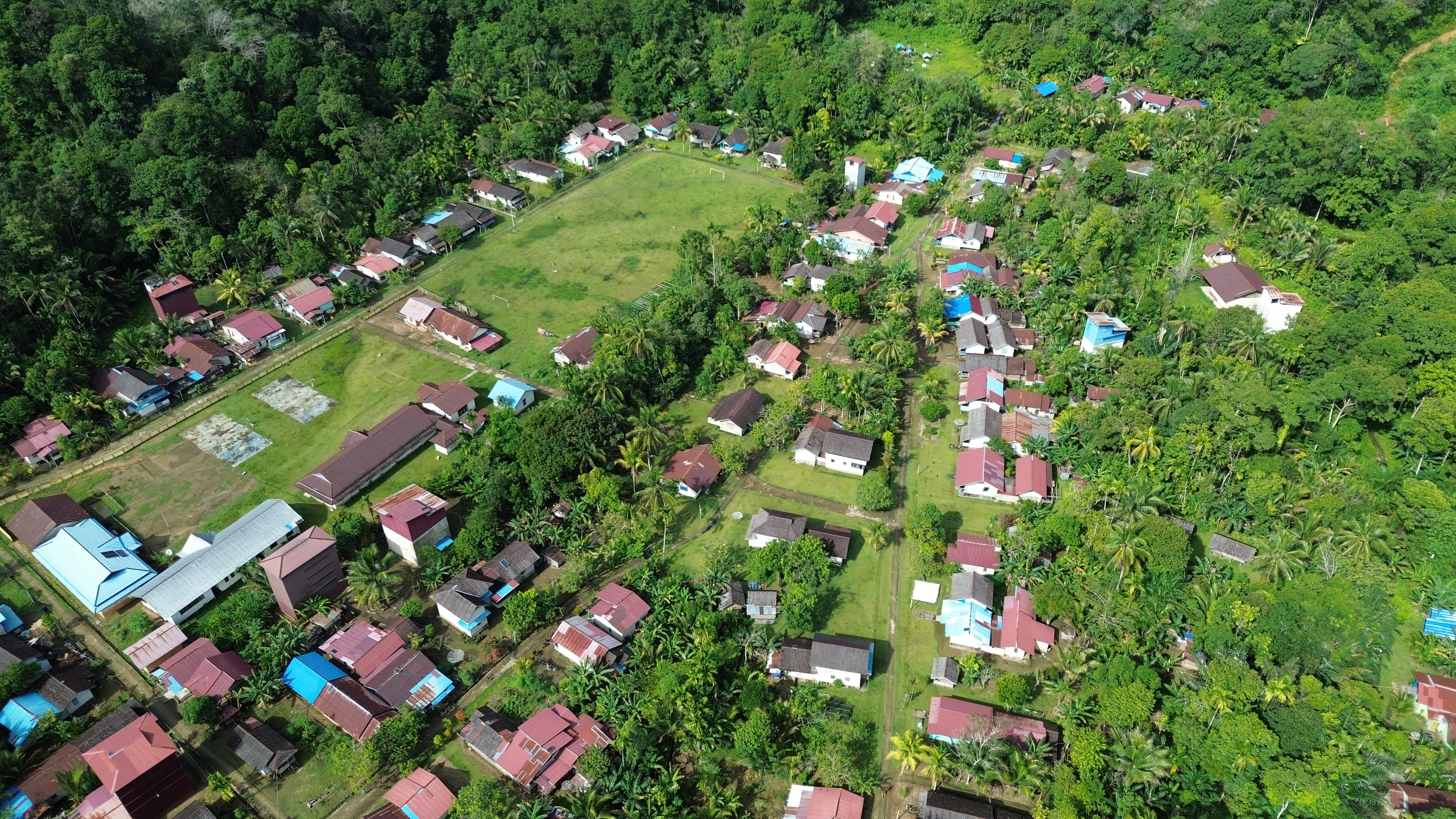
Penyuguk Village is one of the most remote in Ella Hilir Sub-District, Melawi District. Eva lives there and knows what it means to overcome challenges. The village sits on the border between West and Central Kalimantan. It is accessible only through steep roads and long journeys. Distance has never stopped its people from envisioning a better future.
A mother of three and Treasurer of the Penyuguk Lestari Forest Farmer Group, Eva first became interested in the restoration program through coffee. During a training session, she learned how coffee could be integrated into agroforestry systems, generating income while helping restore degraded land—an approach now providing financial stability for her group and encouraging community participation. What began as curiosity quickly turned into a vision.
“I saw an opportunity for our future,” Eva recalled. “Not only for my family, but for the whole village.”
That vision inspired her to act. Eva encouraged other women in the village to join the program together. Today, seventeen women are actively involved in the restoration effort. Together, they collect seedlings from nearby forests, prepare polybags, and monitor plant growth. They care for hundreds of young trees that will one day become part of a healthier landscape.
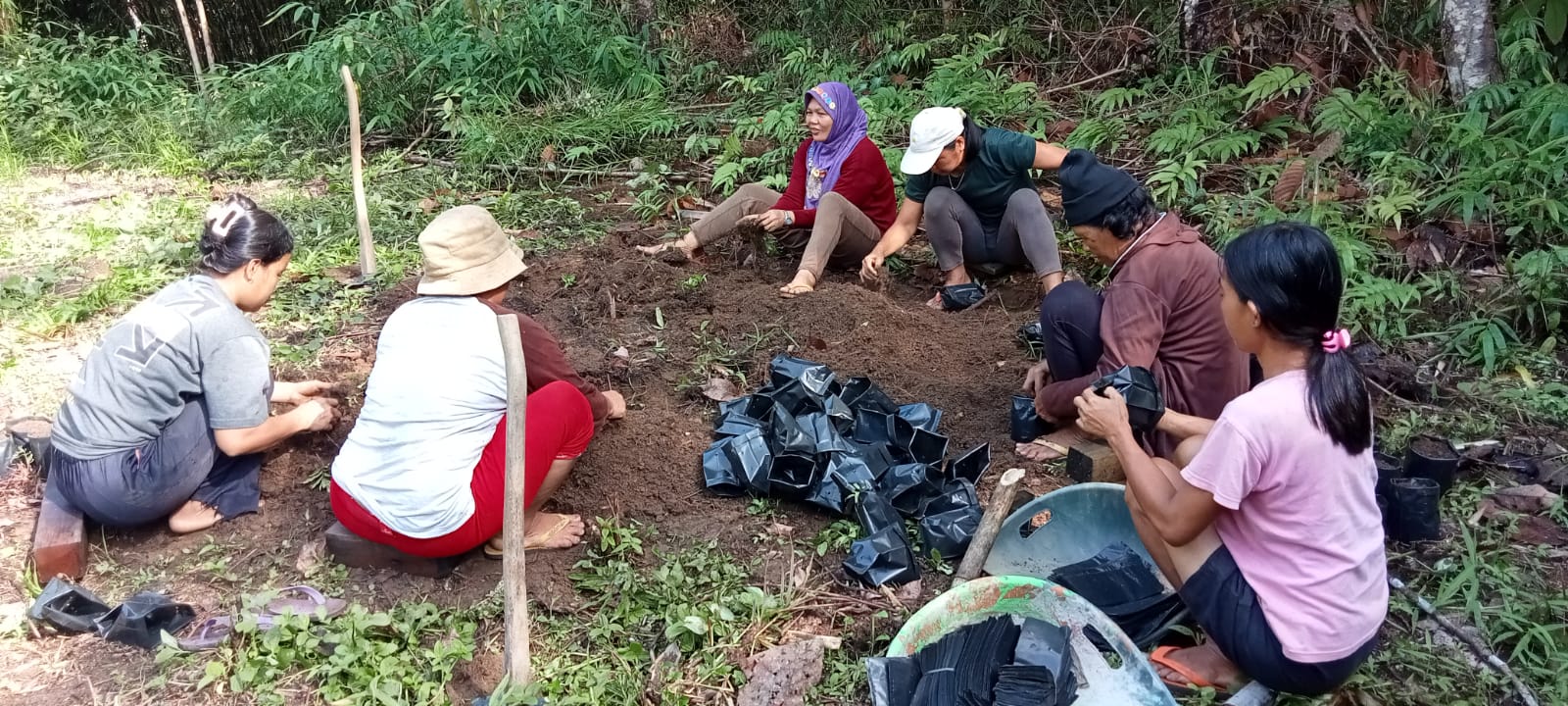
For many women, the project has opened doors to new knowledge and experiences. They have learned how to identify healthy seedlings and propagate coffee through cuttings. They also produce organic fertiliser using local materials. Skills that once seemed out of reach now become part of daily life. “I used to think all seedlings were the same,” Eva said with a smile. She continued, “now I know how to choose the best ones and how important that is for successful planting.”
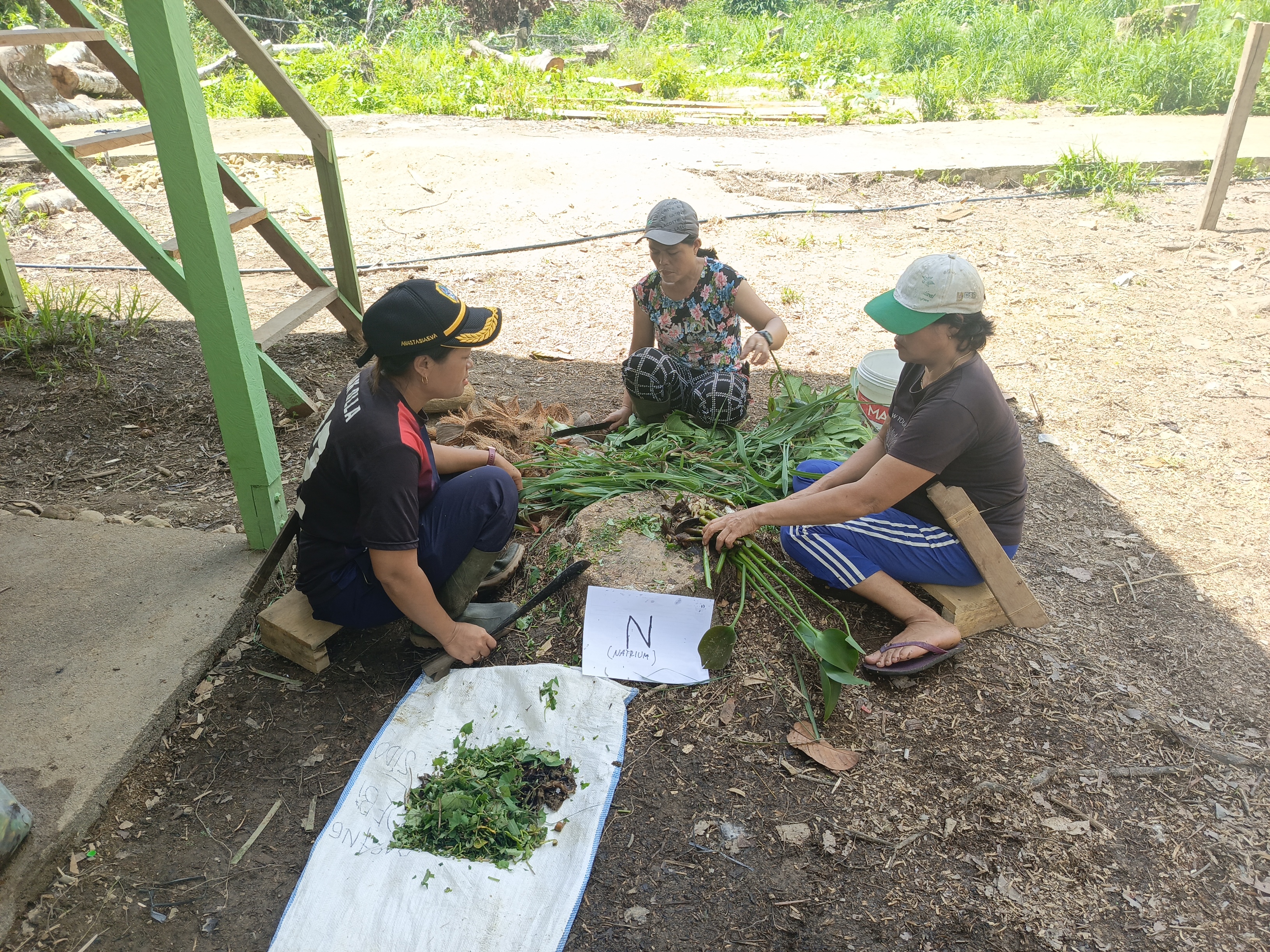
In Penyuguk, restoration is not limited to replanting trees but is also part of a wider effort to build a stronger foundation for sustainable forest management. With support from WWF-Indonesia, community is preparing Social Forestry scheme for Penyuguk Kanan–Olla Buluh Village Forest and Olla Lalan’k Customary Forest. Both initiatives are currently being submitted to the government.
The women prove that restoration is not only men’s work. Men often spend long hours working outside the village or collecting timber species from deeper forests. Women, meanwhile, have found ways to contribute alongside household responsibilities. Through teamwork and a rotating maintenance schedule, they ensure the plot receives year-round care.
“Even when the weather is bad, if it is our turn, we still go,” Eva said. Their dedication is transforming both the landscape and community perspectives.
In the past, forests were often viewed primarily as resources to be harvested. Today, conversations in Penyuguk are increasingly focused on how forests can be protected while still providing economic benefits. Community members are beginning to see that restoring land and improving livelihoods can go hand in hand.
For Eva, this shift in perspective is one of the program's greatest achievements. “Now people think more about the future,” she explained. “Before planting something, we ask ourselves what benefits it will bring in years to come.”
As the seedlings continue to grow, so does the community’s hope. Eva envisions an agroforestry plot that will become a legacy for future generations, a place where young people can learn, work, and continue restoration efforts started long before their time.
In Penyuguk, the women are planting more than trees. They are planting opportunity, resilience, and hope, one seedling at a time.
“Don’t give up on protecting forests. We may not see the results immediately, but if we keep planting and caring for the land, future generations will enjoy the benefits.”
(Anastasi Eva, Treasurer of Penyuguk Lestari Forest Farmers Group)