CLOSING THE FOREST FINANCING GAP IN INDONESIA: CHALLENGES, REALITIES AND FUTURE DIRECTIONS
Indonesia's forests are one of the pillars of the world's most biodiverse ecosystems and play an important role in maintaining global climate balance, hydrological systems and the livelihoods of millions of people. Our forests provide an enormous range of economic, social and environmental benefits, yet are often not fully reflected in the formal economic system. As the formal economic system begins to internalize forest sustainability, the costs associated with conservation, protection and restoration will become increasingly visible and measurable.
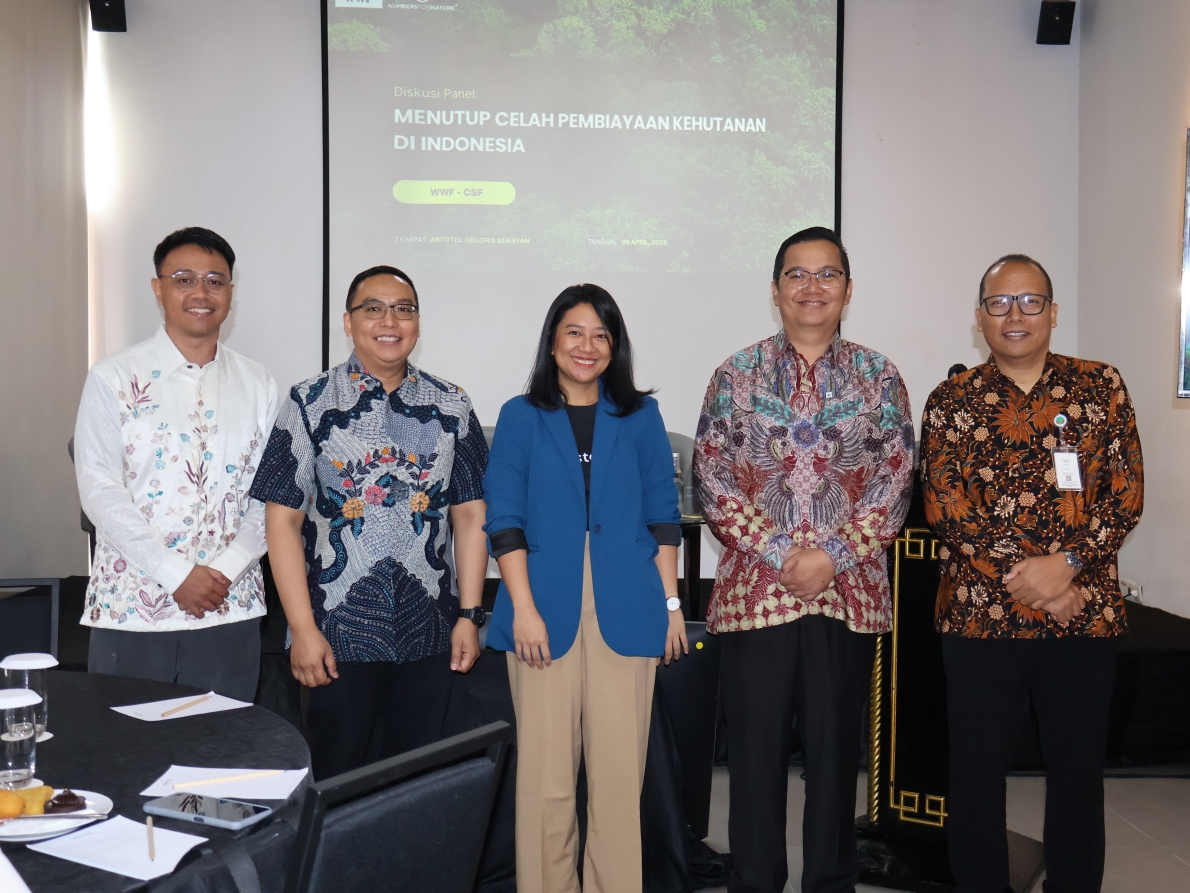
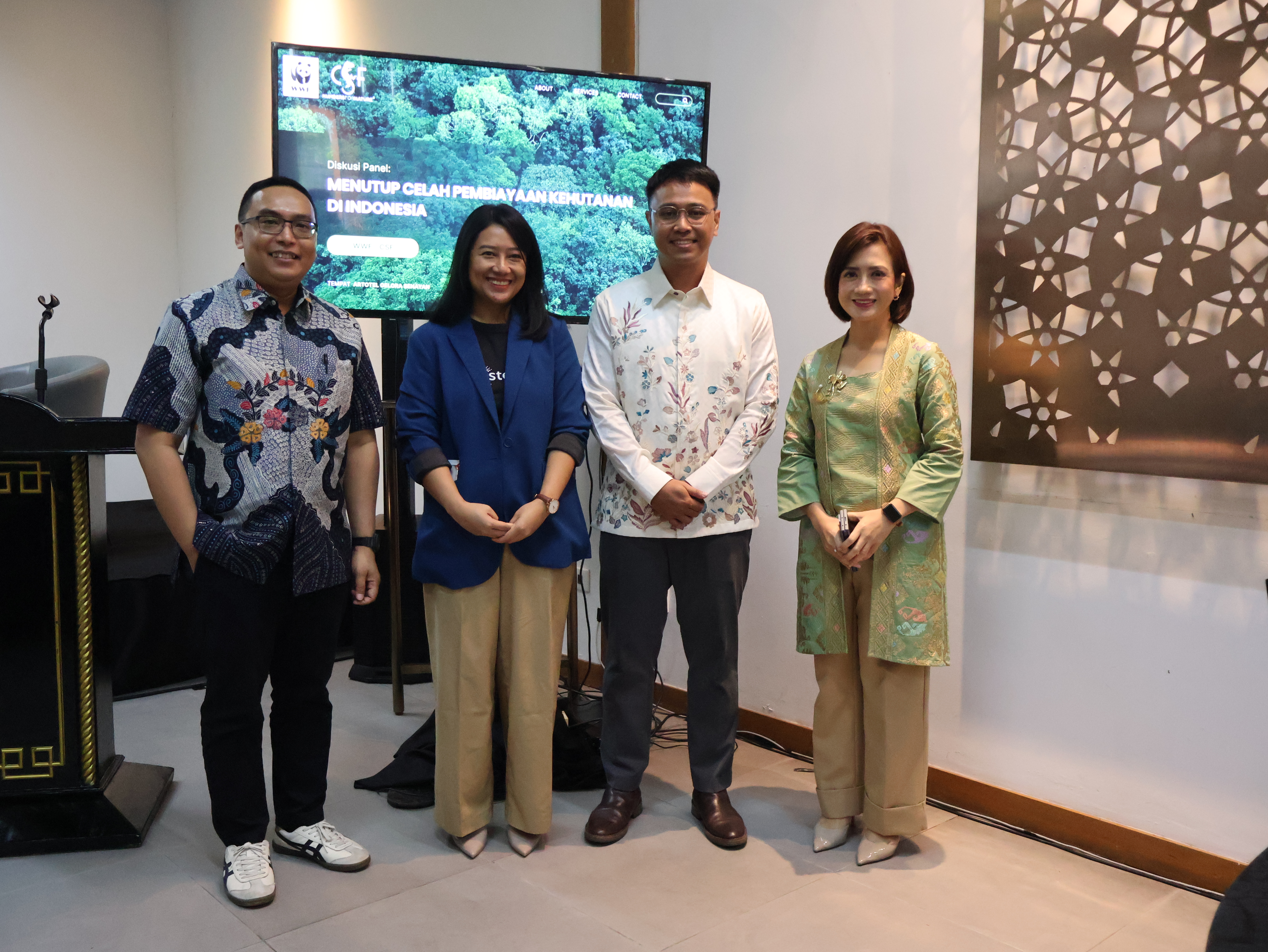
Some time ago, Wednesday, April 8, 2026, a discussion event titled "Closing the Forest Financing Gap in Indonesia", was organized by WWF-Indonesia and Conservation Strategy Fund (CSF) Indonesia with the aim of opening a dialogue and disseminating the results of the Financing Forest in Brazil and Indonesia study. The dialogue brought together various stakeholders from the public and private sectors to discuss the forest financing gap in Indonesia in achieving the 2030 FOLU Net Sink and Enhanced Nationally Determined Contribution (NDC) climate targets and strategic steps to close it. The event was officially opened by Aditya Bayunanda, CEO of WWF-Indonesia, together with Krisdianto, Director of Forest Dues and Administration of Forest Products (IPHH), Ministry of Forestry.
Forest Finance Landscape: Significant Inequalities
Forest destruction has proven to have a huge economic impact. One case in point is the 2015 forest fires that caused losses of more than US$16 billion, equivalent to about 1.9% of Indonesia's Gross Domestic Product (GDP). On the other hand, forests play an important role in supporting the achievement of national climate commitments, including the 2030 NDC and FOLU Net Sink targets with the potential to reduce greenhouse gas (GHG) emissions by 140 million tons of CO2e.
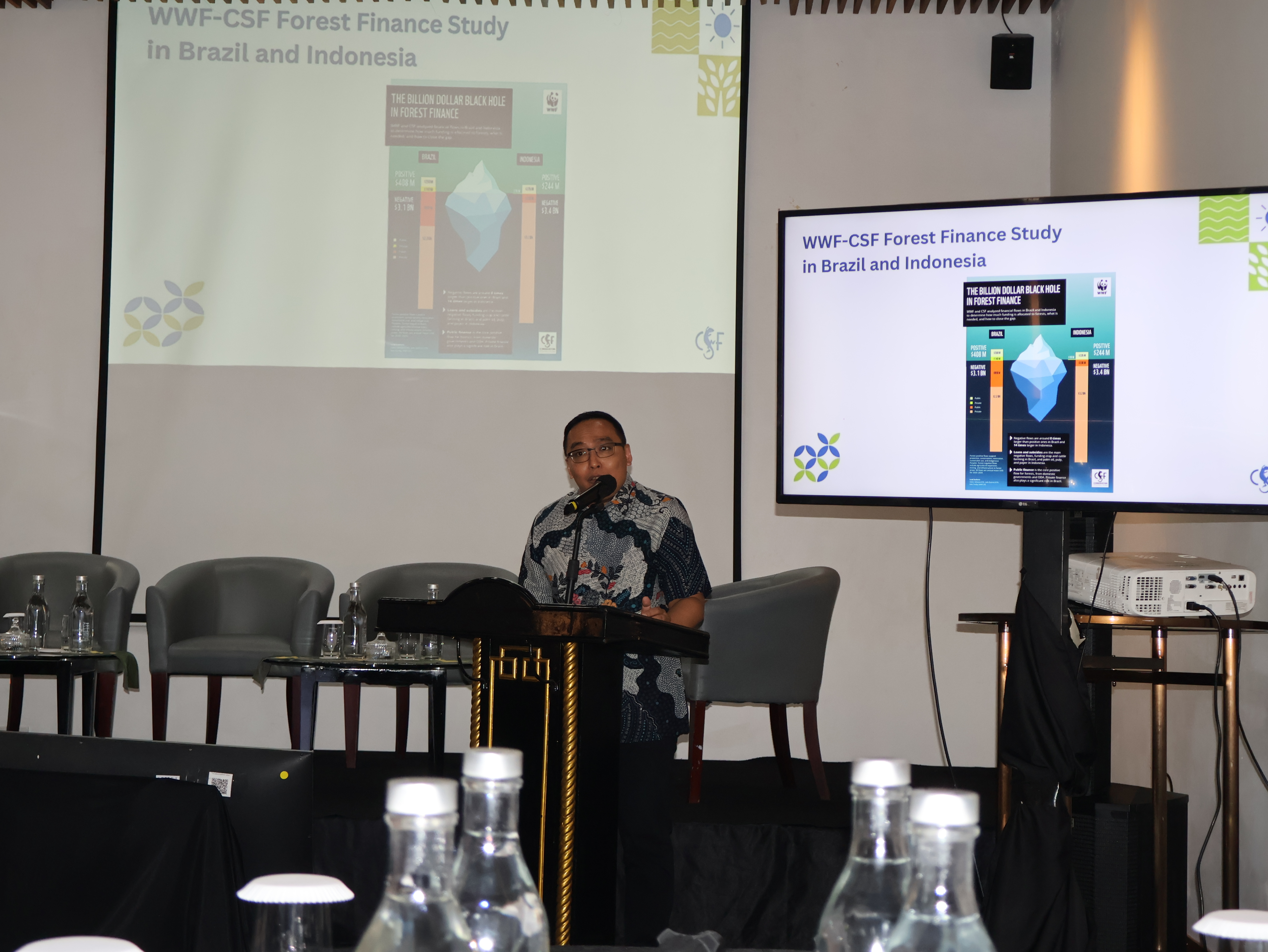
In the opening session, CSF Indonesia presented the results of the Forest Financing in Indonesia study, which highlighted the state of forest financing in Indonesia. The study showed a huge imbalance in financing flows. Fund flows that contribute to forest destruction (negative flows) are recorded at US$ 3.4 billion per year, far exceeding the flow of funds that support conservation and restoration (positive flows) which only amount to US$ 244 million. In other words, funding that destroys forests is about 14 times greater than funding that protects them.
Positive funding mostly comes from the public sector, including government budgets and Official Development Assistance (ODA), with a contribution of US$ 226 million. Meanwhile, private sector contributions are still very limited, only around US$ 18 million. In contrast, negative finance is dominated by the private sector, mainly through instruments such as agricultural loans and bonds supporting high-deforestation-risk commodities such as palm oil, pulp and paper.
Wide Funding Gap
The study also estimates that the annual funding requirement to maintain and care for forest ecosystems in Indonesia is around US$ 5.3 billion. With the current positive funding flow of only US$ 244 million, the need has only been met by about 5% of the target. This creates a finance gap of US$ 5.1 billion per year.
It should be noted that these figures may underestimate the actual situation, given data limitations, especially from the private sector and informal financing activities that have not been thoroughly documented. This reflects another challenge related to transparency in documentation and reporting, which results in limited accessibility of information for stakeholders to plan, strategize and intervene appropriately to close the gap.
As part of the effort to improve transparency and accessibility of information, the results of this study are planned to be published openly. In addition, the findings of the study will also be submitted to the Ministry of Forestry and related government agencies as a reference in the formulation of future policies.
Sustainable Funding Challenges and Needs
A panel discussion moderated by Prita Laura as a journalist and communication specialist who can elevate and spark the discussion with other perspectives and discuss various challenges in promoting sustainable forest financing.
Risyad Tri Setiaputra as Sustainable Finance Lead of WWF-Indonesia emphasized that in the future, conservation financing is projected to increasingly rely on a combination of private investment and public funds due to the declining trend of global Official Development Assistance (ODA). Approaches such as Nature-based Solutions (NbS) have the potential to create economic value from nature, which can then be reinvested to support conservation efforts.
However, supporting the NbS approach requires policy improvements such as incentives and a stronger legal umbrella to support conservation-based financing. In addition, raising awareness about financing opportunities, such as carbon finance, is still something that is voluntary for many actors in the conservation sector.
Market Perspectives and Financing Instruments
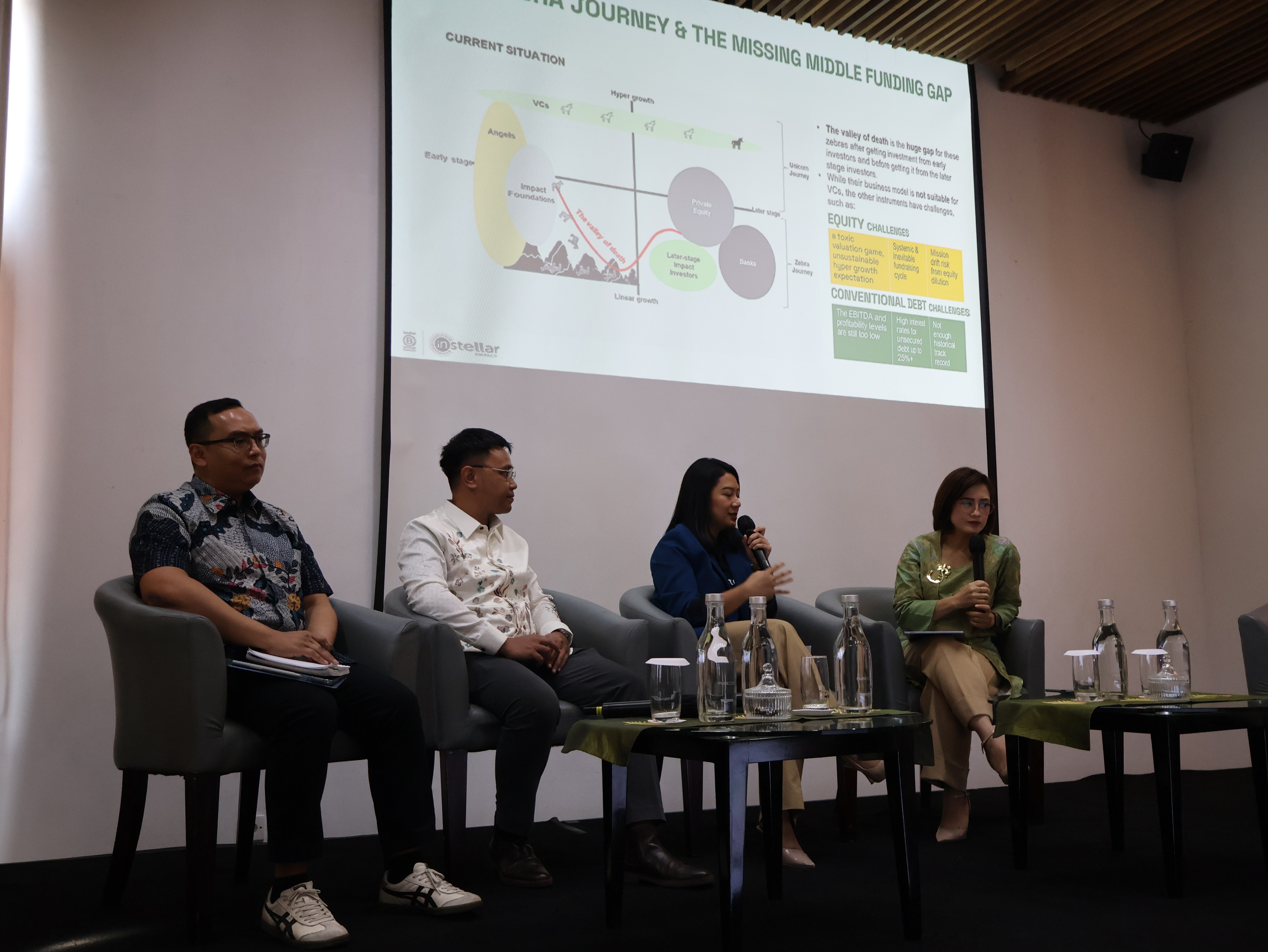
From the perspective of market players, Ms. Adisti Chandra, Chief Operating Officer of Instellar Impact highlighted that approaches such as agroforestry often face challenges as they are considered less profitable in the short term due to unattractive returns and high risk of default. This emphasizes the important role of regulation in lowering the risks associated with short-term returns, so as to encourage greater financing flows to the forestry sector.
In addition, access to finance and markets remains a key barrier, particularly for local and community actors. In Indonesia, demand for sustainable products at premium prices is also still relatively limited, limiting market incentives for sustainable practices.
In terms of financing instruments, grants are still the most commonly used mechanism for small-scale businesses. Meanwhile, for medium-sized enterprises, schemes such as convertible grants are considered to have potential as they offer flexibility to the funding recipients, with lower borrowing costs compared to commercial financing.
The Role of Financial Institutions and Blended Finance
The discussion also highlighted the important role of financial institutions in directing financing flows. One proposed approach is to channel financing through offtakers that commit to accommodate and purchase forest products in an effort to maintain price stability and connect producers/farmers to larger markets. However, this approach also faces challenges as offtakers tend to be reluctant to bear additional risks.
From the government side, the President Director of the Environmental Fund Management Agency (BPDLH) Mr. Joko Tri Haryanto emphasized its role in managing and channeling funding through the blended finance scheme. In practice, one of the main challenges is the financial audit aspect, where many conservation projects are technically feasible, but have not met the financial feasibility standards.
To overcome this, BPDLH cooperates with intermediary institutions to facilitate access to financing, while encouraging improved governance and financial transparency at the local level.
>
Driving Systemic Change
At the end of the discussion, it was emphasized that the most realistic approach at the moment is to optimize instruments that already have a clear legal basis such as; public funding, government, private, or institutional grants, as well as APBN/APBD funding program plans with the potential to be related to short, medium, and long term conservation efforts as well as restoration and safeguarding of forestry lands.
On the other hand, the private sector needs to increasingly realize that environmental and climate risks are real financial risks that can directly impact business operations. Therefore, a shift in mindset from a short-term profit orientation towards a more sustainable approach is required.
The discussion emphasized that closing the forest financing gap requires not only additional sources of funding, but also systemic transformations in policies, market mechanisms, and perspectives on the economic value of forest ecosystems.